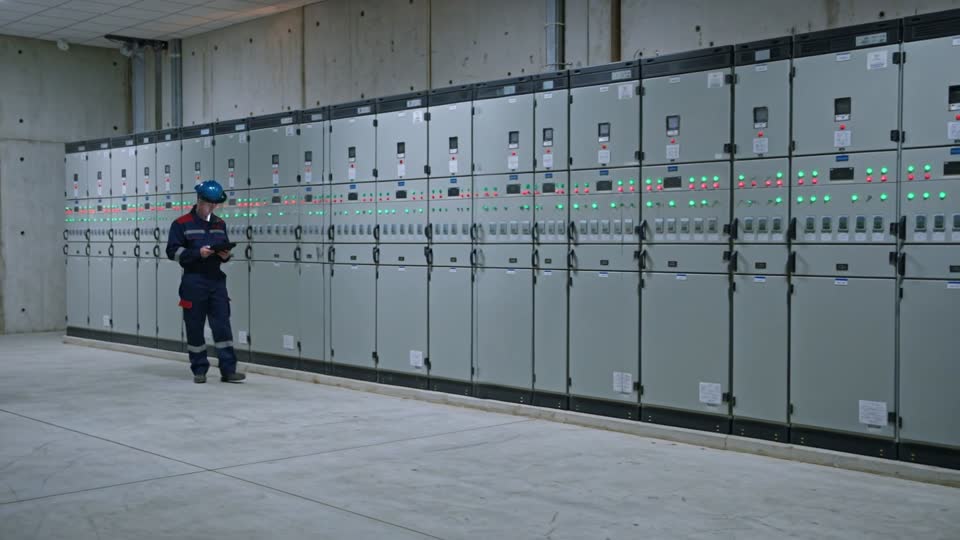
Service · E-120
Field evaluations and special inspections for unapproved equipment
A machine that arrives without a Canadian certification mark cannot simply be wired in. In Alberta it needs approval from an accredited body first, and the time to find that out is before the purchase order, not at the electrical inspection.
CCT 01The rule: approved equipment only
The Canadian Electrical Code requires electrical equipment to be approved, and in Alberta the Electrical Code Regulation says what approved means. No person may manufacture, install, sell or offer for sale equipment related to electrical systems for use in Alberta unless it has been certified by a certification body, or inspected by an inspection body, each acting within its accreditation by the Standards Council of Canada.1 Utility distribution and transmission equipment is outside that section.1
Alberta’s STANDATA on this section spells out the two routes. Products certified by an accredited certification body are approved, and so are products an accredited inspection body accepts through a field evaluation to CSA SPE-1000, or SPE-3000 for medical equipment. The same bulletin points to the Standards Council of Canada’s directories of accredited bodies and their scopes, and to its list of recognized Canadian approval marks.2
The obligation falls on the installer as well as the seller. An electrical contractor who connects unlabelled equipment is installing unapproved equipment, and a safety codes officer checking the installation verifies that every piece of equipment in it is approved.3 The code edition in force is CSA C22.1-24, in effect in Alberta since April 1, 2025.4
CCT 02Equipment that usually needs a field evaluation
Field evaluation, called special inspection in Canada, is meant for equipment where regular certification is impractical. CSA’s model code gives examples: custom-built equipment for a special application, equipment made on a non-repetitive basis, models sold in small numbers (not more than 500 per model per year nationally, per inspection body), equipment not available certified, and equipment already installed on site awaiting approval.5 On Calgary projects that usually means:
- Imported machinery with European, Asian or US-only markings, including production equipment, packaging lines, commercial kitchen equipment and fitness or salon equipment brought in by a tenant.
- Custom control panels built by a machine builder or integrator that is not certified to build labelled panels.
- Modified certified equipment. Adding certified devices or kits such as indicating lights, control switches or monitoring devices generally does not require re-certification, but changes beyond that should be re-evaluated by special inspection or field certification.3
- Metering added to switchgear. Alberta reminds industry that altering certified equipment may void its certification; metering added to existing gear should use approved devices, with the authority having jurisdiction consulted first.3
- Skids and packaged equipment. Assemblies such as air compressors and lube oil packages may carry an approval marking if a certification or special inspection body has evaluated them; a building or structure itself is generally not electrical equipment.3 Calgary also lists factory-built structures (skid units) among the permits that may be needed besides the electrical permit.6
Some equipment is outside the field evaluation route altogether. The model code excludes hazardous-location equipment, medical electrical equipment (which has its own code, SPE-3000), components that need evaluation as part of a larger assembly, equipment other than transformers connected above 46 kV, and manlifts and elevators other than their control panels, and it is not meant for re-evaluating equipment another body has already rejected.5 Hazardous-location equipment needs full certification; plan for that at the specification stage. The industrial electrical page covers hazardous locations.
CCT 03What the process looks like
CSA describes three general steps: project initiation, evaluation of the equipment, and a written field evaluation report to the customer.7 In practice:
- Initiation. The owner, the equipment vendor or the installing contractor engages an accredited inspection body and sends the documents. CSA lists schematics, construction drawings, a bill of materials showing component approvals, an English manual, nameplate drawings, certificates for critical components and any test data.7
- Evaluation. The inspector examines construction, marking and wiring against SPE-1000 and the applicable product standard, and runs the non-destructive tests that apply. The evaluation can take place at the factory, at the client’s facility or where the equipment will be installed.5
- Corrections. Findings are corrected, often by replacing uncertified components, adding guarding or overcurrent protection, fixing wire sizing or adding markings, and then re-checked.
- Label and report. Equipment that conforms may be marked with a field evaluation label.5 Labels are serialized and applied to each unit evaluated.8 The report goes to the customer and should be kept with the equipment records.
Several accredited bodies offer the service in Alberta, including CSA Group8 and Intertek,9 each with its own label. Check the Standards Council of Canada directory referenced by Alberta for each body’s current scope before engaging one.2 This site does not recommend or rank inspection bodies. The current model code is CSA SPE-1000:25, the sixth edition, which added requirements for commercial equipment with UV-C sources, industrial ozone generators and Power over Ethernet.5
CCT 04Who does what
| Item | Usually carried by | Get in writing |
|---|---|---|
| Requiring a Canadian certification mark | Owner, in the purchase order | Acceptable marks named; who pays if the unit arrives without one |
| Technical documents for the evaluation | Equipment manufacturer or vendor | Delivery date, English manual, component certificates |
| Engaging the inspection body | Owner, vendor or installing contractor | Whose contract it is and who attends |
| Corrections found in the evaluation | Vendor for internal wiring; electrical contractor for field wiring | Price basis for corrections and re-inspection |
| Supply feeder, disconnect and field wiring | Electrical contractor, under the electrical permit | Nameplate data used to size the supply |
| Electrical inspection of the installation | City of Calgary safety codes officer | Access to the equipment and the label on the day |
| Keeping the report and label record | Owner | Report copy filed with the asset register |
Alberta expects the certification or special inspection body to work with the authority having jurisdiction, and restricting a safety codes officer’s access to equipment or installations is a violation of section 34 of the Safety Codes Act.3
CCT 05What drives time and cost
No official source publishes a price or a turnaround for a special inspection, and bodies quote per project. What moves the effort is predictable:
- Documentation. A complete package with schematics, bill of materials and component certificates shortens the evaluation. Missing drawings mean the inspector reconstructs them on site.
- Component approvals. Equipment built with Canadian-approved components usually needs fewer corrections. Unapproved breakers, contactors, power supplies or cords are the common replacement items.
- Size and complexity. A single control panel is a different job from a production line with several panels, drives and interconnecting cables.
- Location and travel. Evaluation at the factory before shipping can catch problems while the builder can still fix them; evaluation in Calgary after installation avoids shipping delays but puts corrections on the critical path.
- Corrections and re-visits. Each round of corrections means another visit and another report revision.
- Quantity. Labels are applied unit by unit, so a batch of identical machines is still several labels.8
Add the electrical side: the supply circuit and disconnect are permitted work, at $112 plus $9.79 per $1,000 of construction value plus the Safety Codes Council fee.10 Staff wages are not a guide to what inspection bodies or contractors charge; commercial electrician rates explains the difference.
CCT 06New machines and tenant fit-outs
New machine installs. Put the approval requirement in the purchase order: equipment must carry a certification mark recognized in Canada, or the vendor arranges and pays for a special inspection before delivery or before start-up. Ask the vendor early whether a Canadian-certified version exists; it is often simpler than evaluating a foreign one. Schedule the evaluation ahead of the electrical final inspection, not after it. The industrial electrical page covers motor feeders, drives and controls, and manufacturing plants see this most often.
Tenant fit-outs. A tenant bringing imported kitchen, salon, fitness or laboratory equipment is responsible for getting it approved, but the problem surfaces during the landlord’s schedule. Ask for an equipment list with markings before the electrical design is finished. Restaurants meet this with imported cooking and refrigeration equipment; the commercial kitchen electrical guide covers the rest of the kitchen scope. Clinics bringing medical devices should expect the separate SPE-3000 route; see healthcare and clinics. The tenant improvements page covers the fit-out sequence and the permits guide the City’s requirements. Calgary requires an electrical permit for all electrical installations in new or renovated buildings.6
CCT 07The risk of getting it wrong
Unapproved equipment found at the electrical inspection stops the job until it is evaluated or replaced. The direct cost of a failed City inspection is modest: a re-inspection is $327 including the Safety Codes Council fee and GST.10 The indirect cost is the idle machine, the delayed occupancy and the trades standing by.
The legal exposure is larger. Under the Safety Codes Act, a first offence carries a fine of up to $100,000, plus up to $1,000 for each day it continues, or up to 6 months in prison.11 Insurers may also ask whether equipment involved in a loss was approved.
Replacement parts need care too. Alberta reminds industry that a breaker must be approved for the specific panelboard it is installed in, usually meaning the same manufacturer, and that the burden of proof for exceptions lies with the installer.3 Approval requirements also change: Alberta’s variance for meter-mounted transfer equipment is archived on January 1, 2027, after which new units must be certified to ANSI/CAN/UL 1008M:2025.12
Do not energize to “see if it works”
Unapproved equipment may have undersized wiring, missing overcurrent protection or unguarded live parts. It should not be connected or energized for trials before it is evaluated. Corrections inside control panels and machinery are work for qualified electrical workers under lockout. This page is planning information, not instructions or an evaluation.
Questions people ask
What is a CSA special inspection?
It is CSA Group’s name for a field evaluation: a one-time evaluation of specific electrical equipment to CSA SPE-1000 by an accredited inspection body, instead of full product certification. Equipment that conforms receives a serialized label.8 Other accredited bodies offer the same service under their own labels.9
What is a CSA special inspection label?
It is the field evaluation label applied to each unit that has passed a special inspection. In Alberta, equipment accepted by an accredited inspection body through a field evaluation to SPE-1000 is approved, just as certified equipment is.2 Keep the report with the equipment records; the label covers that unit, not the model.
Is a field evaluation the same as certification?
No. Certification is based on type testing of a representative sample, with follow-up inspections of production. A field evaluation checks a specific unit against construction, marking and test requirements, and CSA’s model code states it is not a substitute for certification.5 It suits one-off, custom and low-volume equipment.
Can US-listed equipment be used in Alberta?
Only if it carries a mark from a body accredited by the Standards Council of Canada for Canadian certification, or it is field evaluated. A US-only listing does not meet Alberta’s definition of approved on its own.1 Check the mark against the Standards Council of Canada’s list of recognized Canadian approval marks, which Alberta references.2
Does modifying a certified control panel void its approval?
Minor additions of certified devices or kits, such as indicating lights, control switches or monitoring devices, generally do not require re-certification. Changes beyond that should be re-evaluated by special inspection or field certification, and any alteration of certified equipment may void the original certification.3
Sources
- Electrical Code Regulation, Alta Reg 209/2006, section 2Alberta King’s Printer · retrieved 2026-09-27
- STANDATA 18-LEG-002 (REV 1): Electrical systems equipmentAlberta Municipal Affairs · 2024-06
- STANDATA 24-ECB-002: 2024 CE Code Section 2, General rulesAlberta Municipal Affairs · 2025-04
- Electrical codes and standardsGovernment of Alberta · retrieved 2026-09-25
- CSA SPE-1000:25, Model Code for the field evaluation of electrical equipment (product page and preface)CSA Group · retrieved 2026-09-27
- Electrical permits for contractorsThe City of Calgary · retrieved 2026-09-25
- 14 Things to Know About SPE-1000CSA Group · retrieved 2026-09-27
- North American Field Evaluation ServicesCSA Group · retrieved 2026-09-27
- Special Inspections: SPE-1000 Certification for CanadaIntertek · retrieved 2026-09-27
- 2026 Building & Trade Permit Fee Schedule (R2026-02)City of Calgary · 2026 schedule R2026-02
- Safety Codes Act, RSA 2000, c S-1 (office consolidation)Alberta King's Printer · consolidation current as of 2025-12-01
- Notice to archive 24-ECV-002-024-MMTE: Meter mounted transfer equipmentAlberta Municipal Affairs · July 2026
Related
-
 E-101
Tenant improvements
Office, retail and restaurant fit-outs: what the base building provides, what the tenant’s electrical scope covers, the drawings and the permits.
E-101
Tenant improvements
Office, retail and restaurant fit-outs: what the base building provides, what the tenant’s electrical scope covers, the drawings and the permits.
-
 E-102
Commercial service upgrades
Raising a building’s service: capacity checks, the ENMAX application and investment, CT metering, drawings and the shutdown.
E-102
Commercial service upgrades
Raising a building’s service: capacity checks, the ENMAX application and investment, CT metering, drawings and the shutdown.
-
 E-103
Three-phase power
New three-phase services and single-to-three-phase conversions for equipment, kitchens, shops and EV charging.
E-103
Three-phase power
New three-phase services and single-to-three-phase conversions for equipment, kitchens, shops and EV charging.