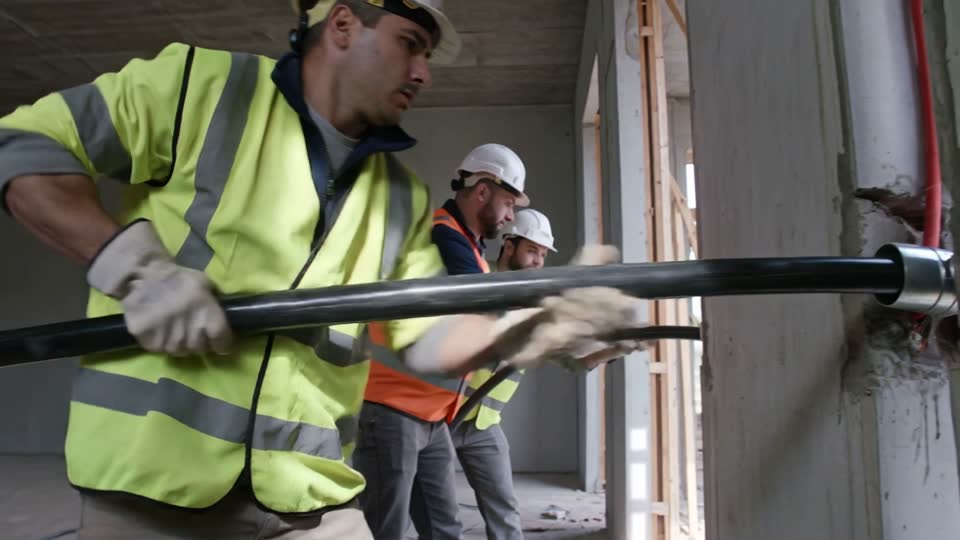
Service · E-105
Industrial electrical work in Calgary
Industrial electrical scope starts with the production process and what happens when each load stops. The wire, conduit and panels follow from that.
CCT 01Start from the process, not the panel
A plant’s electrical scope is defined by what it makes and how it fails. Before any drawing, write down the production sequence, the motor and drive schedule, who owns the control system, and the consequence of losing each load: a spoiled batch, a frozen line, a stopped conveyor, or very little. That list decides which loads need dedicated feeders, which need backup power and which can ride through a shutdown.
Separate two kinds of work early. Building distribution (the service, switchboards, feeders, lighting and receptacles) follows the electrical code and the City’s permit process. Machine and process work (control panels, drives, interlocks and instrumentation) also brings in the machine supplier, the controls integrator and often certification of the equipment itself. A price that blurs the two will have gaps at every interface.
On who does the work: Alberta has no separate industrial electrician trade. The compulsory Electrician apprenticeship covers both construction and industrial education,1 and only master electricians can obtain electrical permits.2 When a plant says it needs an industrial electrician, it means an electrician with industrial experience, and the contractor holding the permit needs a master electrician.
CCT 02Industrial scope, package by package
| Package | Typical contents | Design usually by | Interface to settle |
|---|---|---|---|
| Distribution | Switchboards, transformers, feeders, busway | Electrical engineer | Available fault current and space for future loads |
| Motor control centres | Starters, feeder buckets, control power | Engineer with the MCC supplier | Bucket schedule, spares and who wires the control circuits |
| Variable frequency drives | Drives, reactors or filters, motor cables | Engineer with the drive supplier | Harmonics, cable type and who sets parameters |
| Controls and PLCs | Control panels, I/O, networks, operator screens | Controls integrator | Software ownership, backups and who proves each sequence |
| Instrumentation | Transmitters, analyzers, valve wiring | Process or instrumentation engineer | Calibration, loop checks and tagging |
| Cable management | Cable tray, conduit, wireways, supports | Engineer or contractor | Routes past cranes, racking and process piping |
| Hazardous locations | Approved equipment, seals, wiring methods | Qualified specialist using the owner’s process data | The area classification document itself |
| Grounding and bonding | Equipment bonding, static control, ground grid | Electrical engineer | Test results and what is bonded to what |
| Lighting | High-bay, task and emergency lighting | Electrical designer | Mounting heights, racking layout, controls |
| Commissioning | Rotation checks, functional tests, integrated start-up | Contractor, integrator and operations together | A written acceptance plan and who signs it |
Use the table to build an interface list: for every package, who supplies the equipment, who installs it, who terminates it and who proves it works. The rows where two parties each assume the other is responsible are the ones that stall start-up.
CCT 03Motors, drives and the power bill
Motors dominate the load in many plants, and they shape the ENMAX bill as much as the electrical design. Demand is billed in kVA, not kW, and billing demand is the greatest of metered, ratchet or contract demand, with the ratchet set at 90% of the highest kVA recorded in the last 365 days.3 A large motor started at the wrong moment can set that peak for a year.
ENMAX expects customer equipment to hold a power factor of at least 90%, and may require corrective equipment at the customer’s expense if it does not; the rate schedule has no separate power-factor penalty.4 Because billing is in kVA, poor power factor already raises demand charges. For large secondary-voltage sites on D310, on-peak hours run from 8 a.m. to 9 p.m. on weekdays, excluding statutory holidays,3 which matters when scheduling energy-hungry batches.
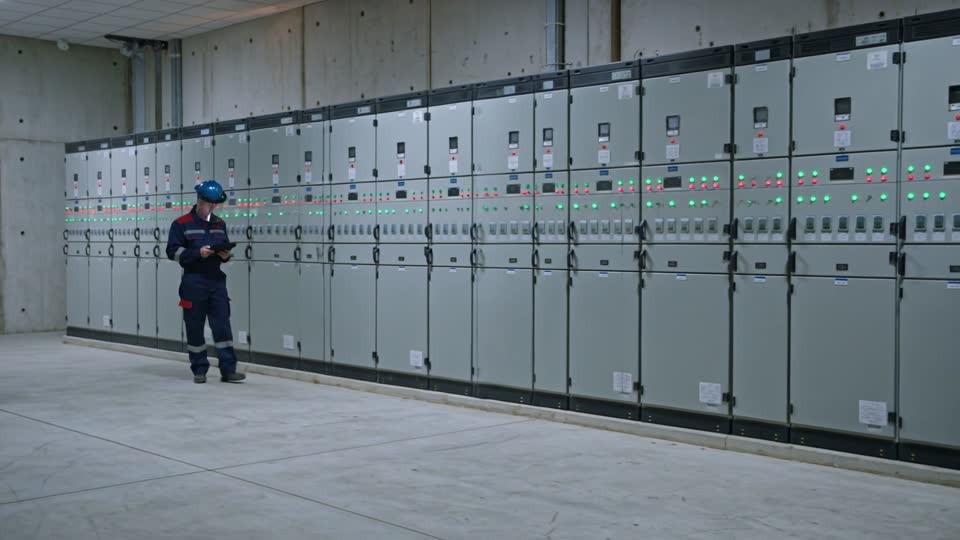
Drives help and complicate. A variable frequency drive softens starting and saves energy on fans and pumps, but it adds harmonic current, needs suitable motor cable and makes the drive supplier part of the electrical scope. Name the harmonic assessment and the drive programming in the contract. The three-phase kVA calculator converts motor loads between kW, kVA and amps at 208 V and 600 V, the voltage guide explains where 600 V distribution is used, and three-phase power covers new services for equipment.
CCT 04Hazardous locations and harsh environments
Grain, flour, sugar and some plastics produce combustible dust; paint booths, fuel handling and solvents produce flammable vapours. Where they do, the electrical installation must suit a classified hazardous location, with equipment and wiring methods approved for that classification. The classification is an engineering document based on the process, ventilation and release sources. Qualified specialists must prepare or review it; it cannot be inferred from a building listing or a previous tenant’s signs, and it belongs in the tender package.
Calgary adds its own environment. The January 2.5% design temperature is −30 °C,5 so outdoor motors, yard lighting, heat tracing and enclosures need ratings and heaters to match. Food processing and cold storage add washdown, condensation and freezer-door heaters. Name these conditions in the scope, because they change the equipment list and the price.
Overhead lines are a separate hazard. Before a crane, boom lift or dump truck works within 7 m of an overhead power line, the employer must determine the line’s voltage and set the safe limit of approach under Part 17 of the OHS Code.6 Part 17 covers overhead lines only; it is not a general rule for electrical work.
CCT 05Lockout, shutdowns and energized work
Industrial electrical work is shutdown work. Alberta’s OHS Code Part 15 requires hazardous energy to be isolated with a secured energy-isolating device before equipment is serviced, repaired, tested, adjusted or inspected.7 Each worker involved is assigned a personal lock with a unique mark or tag,7 and must test and confirm that the equipment is inoperative or otherwise safe before working on it.7 Complex group lockout procedures must be certified by a professional engineer.7
Those rules shape the schedule. A plant that cannot stop production must plan electrical work around maintenance windows, and the scope should state which windows exist, how long they are and what happens if the work overruns. New equipment also means updated lockout procedures, which belong in the handover.
Arc flash and energized work
The OHS Code does not adopt CSA Z462; a 2009 government bulletin only recommended that facility managers keep and follow it.8 Where an employer’s electrical safety program adopts it, the current edition is CSA Z462:24,9 and an arc flash study gives that program its numbers. None of this authorizes energized work. This page is planning information, not a procedure.
CCT 06Permits, drawings and the annual facility permit
Plant electrical work takes an electrical trade permit like any other, and a service change at 600 A and above needs drawings with the permit.10 Whether a registered engineer or architect must design and stamp the building side of a project follows the building code’s professional-involvement rules.11 The commercial permits guide covers the process.
Facilities with their own electricians have a second route. Calgary requires an annual electrical permit where a facility employs a full-time journeyman electrician, and an electrical contractor doing maintenance at a facility may also apply for one.10 It costs $156 plus a $6.24 Safety Codes Council fee, $162.24 in total.12 The City issued 232 annual facility electrical permits in 2025.13 Confirm with the City which work the annual permit covers and which needs its own permit.
Where the permit address matches the City’s assessment roll, 1,945 of the 2023–2025 electrical permits at non-residential properties were at industrial properties, and 33.8% of all non-residential electrical permits in those years were in communities the City classes as industrial.13 As of 2026-09-25 the City’s business licence data listed 1,680 licensed manufacturers and 2,237 warehousing and wholesale premises.14 Contains information licensed under the Open Government Licence – City of Calgary.
Balzac, Rocky View County, Airdrie and other neighbours are outside the City. They have their own permit authorities and often a different wire utility, so confirm both before assuming the Calgary process applies.
CCT 07What drives cost, and funding status
In plant work the wire is rarely the expensive part. The drivers are:
- undocumented control logic that has to be traced before anything changes;
- obsolete drives, PLCs or MCC buckets with no direct replacement;
- production windows that force night, weekend or split-shift work;
- access around cranes, racking, process piping and height;
- environmental ratings for dust, washdown, cold or classified areas;
- commissioning with operations staff and the integrator present.
Carry investigation and engineering as explicit line items rather than hiding them inside an apparently firm installation price. On labour, no public body publishes electrical contractors’ billing rates in Alberta. Job Bank reports a median wage of $44.00 an hour for industrial electricians in the Calgary region,15 which is what the worker is paid, not what a contractor charges. The commercial electrician rates guide explains the difference.
Funding changes often, so check status before counting on it. Emissions Reduction Alberta’s SEMI program for industrial and manufacturing facilities is a $70 million program running to March 31, 2027, with waitlists open for all activities.16 Its capital retrofits can receive up to $1,000,000 per facility, at up to 50% of eligible costs for for-profit organizations.16 Calgary’s Commercial CEIP does not accept industrial property,17 and ERA’s Energy Savings for Business has allocated all its funding.18 Statuses are as read on 2026-09-25.
CCT 08Commissioning, handover and related work
Handover in a plant is more than as-built drawings. Ask for:
- final single-line diagrams, MCC schedules and panel schedules;
- PLC and drive programs, with the owner holding the current backup and the licence terms written down;
- vendor manuals, spare-parts lists and recorded settings;
- commissioning and functional test records signed by operations;
- lockout procedures updated for the new equipment;
- a list of known limitations, so the next shift does not discover them the hard way.
Plan the ongoing side at the same time: preventive maintenance and infrared thermography keep new distribution reliable. Sector detail is in industrial and manufacturing, warehouses and logistics and data centres.
Questions people ask
What does an industrial electrician do?
Industrial electricians install, maintain and troubleshoot the electrical systems of plants, processing facilities and large warehouses: motors and motor controls, drives, control panels, instrumentation wiring, distribution and lighting. In Alberta it is not a separately certified trade; the Electrician apprenticeship covers both construction and industrial education.1 Job Bank estimates that about 1,530 people work as industrial electricians in the Calgary region.19
Is a commercial and an industrial electrician the same?
In Alberta the certificate is the same: Electrician, a compulsory-certification trade.1 The work differs. Commercial work centres on building distribution, lighting, fit-outs and life-safety systems; industrial work centres on motors, drives, controls and process uptime. When hiring, ask for relevant project experience and confirm who will hold the permit.
How much do industrial electricians charge per hour?
No official source publishes contractor billing rates in Alberta. The official figures are wages: Job Bank puts Alberta industrial electricians at $25.00 low, $44.00 median and $68.00 high per hour.15 A contractor’s charge-out rate adds overhead, vehicles, tools, insurance, supervision and margin to wages, and varies with shift premiums and site requirements.
What is a VFD and what does it do?
A variable frequency drive controls an AC motor’s speed by varying the frequency and voltage it supplies. Drives give soft starts, lower energy use on fans and pumps, and precise process control. They also add harmonic currents to the building system, need suitable motor cabling and have parameters someone must set and document, so the drive supplier, the engineer and the electrical contractor all touch the same scope.
What is hazardous location classification?
It is the engineering assessment of where flammable gases, vapours, combustible dusts or fibres may be present, how often, and how far they can spread. Each area receives a classification, and the electrical equipment and wiring methods installed there must be approved for it. Qualified specialists prepare it from process data; electrical contractors install to it and should receive it with the tender.
Sources
- Electrician - Trade profileGovernment of Alberta, Alberta Apprenticeship and Industry Training (Tradesecrets) · retrieved 2026-09-25
- About Master ElectriciansSafety Codes Council · retrieved 2026-09-25
- ENMAX Power Corporation Distribution Tariff Rate Schedule - rates in effect as of July 1, 2026ENMAX Power Corporation · Rates in effect as of July 1, 2026 (DAS/SAS rates per AUC Decision 30299-D01-2025, effective January 1, 2026); retrieved 2026-09-25
- ENMAX Power Corporation Distribution Tariff - Customer Terms and ConditionsENMAX Power Corporation · Effective January 1, 2026; retrieved 2026-09-25
- National Building Code - 2023 Alberta Edition, Volume 1, Division B, Appendix C, Table C-2 Climatic Design Data for Selected Locations in AlbertaAlberta Municipal Affairs / National Research Council of Canada · 2023 Alberta Edition, second printing incl. revisions and errata released April 2026
- Occupational Health and Safety Code, Part 17 Overhead Power LinesGovernment of Alberta · retrieved 2026-09-25
- Occupational Health and Safety Code, Alta Reg 191/2021 (office consolidation)Alberta King's Printer · Consolidation current as of March 31, 2025 (amendments to AR 210/2024); retrieved 2026-09-25
- Technical Bulletin Issue No. 37: Arc Flash and Workplace Electrical SafetyGovernment of Alberta (Technical Services Branch) · Dated September 2009; retrieved 2026-09-25
- CSA Z462:24 Workplace Electrical Safety - Online TrainingCSA Group · retrieved 2026-09-25
- Electrical permits for contractorsCity of Calgary · retrieved 2026-09-25
- Changes to existing buildingsThe City of Calgary · retrieved 2026-09-25
- 2026 Building & Trade Permit Fee Schedule (R2026-02)The City of Calgary · 2026 fee schedule, revision R2026-02; retrieved 2026-09-25
- Electrical Permits and Inspections (dataset vxgy-id5s)The City of Calgary, Open Government Licence – City of Calgary · queried 2026-09-25
- Calgary Business Licenses (dataset vdjc-pybd)The City of Calgary, Open Government Licence – City of Calgary · queried 2026-09-25
- Industrial Electrician in Alberta | Wages - Job Bank (NOC 72201)Employment and Social Development Canada (Job Bank) · Reference period 2023-2024 (Labour Force Survey); wages updated 2025-11-19
- Strategic Energy Management for Industry (SEMI)Emissions Reduction Alberta · retrieved 2026-09-25
- Commercial Clean Energy Improvement ProgramThe City of Calgary · retrieved 2026-09-25
- Energy Savings for BusinessEmissions Reduction Alberta · retrieved 2026-09-25
- Industrial Electrician in the Calgary Region | Job prospects - Job BankEmployment and Social Development Canada (Job Bank) · Outlook 2025-2027, updated 2025-12-10; recent trends updated 2026-07-28; page modified 2026-08-07
Related
-
 E-101
Tenant improvements
Office, retail and restaurant fit-outs: what the base building provides, what the tenant’s electrical scope covers, the drawings and the permits.
-
 E-102
Commercial service upgrades
Raising a building’s service: capacity checks, the ENMAX application and investment, CT metering, drawings and the shutdown.
-
 E-103
Three-phase power
New three-phase services and single-to-three-phase conversions for equipment, kitchens, shops and EV charging.