Industry · E-206
Electrical for Calgary plants, manufacturing and cold storage
A plant buys electrical work to add capacity to a process or to keep one running. Start from the production requirement and the cost of downtime, and the electrical scope, the shutdown plan and the documents follow.
As of 2026-09-25 the City’s business licence data listed 1,680 licensed manufacturers in Calgary 18. Where the permit address matches the assessment roll, 1,945 electrical permits issued from 2023 to 2025 were at properties the roll codes as industrial 8; that count is a floor and includes warehouses as well as plants. Much of the region’s industry sits outside the city, in Rocky View County, Foothills County and neighbouring towns, which issue their own permits and are often served by a different wire utility. The Calgary permit and ENMAX details below apply inside the city. Contains information licensed under the Open Government Licence – City of Calgary.
CCT 01How a plant buys electrical work
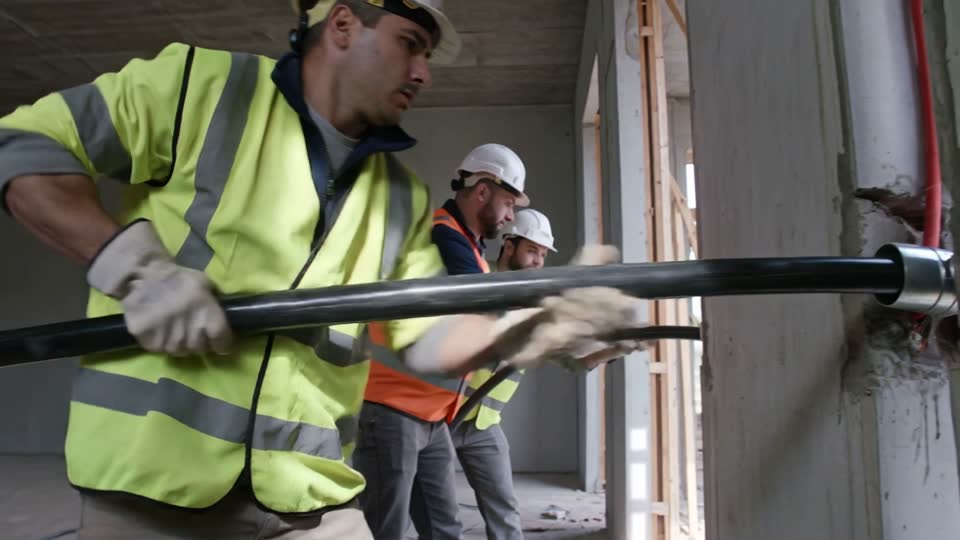
Industrial electrical work is usually bought by the plant’s own engineering or maintenance lead, with production management setting the dates. Around them sit the machine vendors, a controls integrator, sometimes a consulting engineer, the insurer and the electrical contractor. The work falls into recognizable packages: a feeder and connection for a new machine, a production line addition or relocation, motor control centre or drive changes, control panel and instrumentation work, planned shutdown maintenance, and occasionally a service or switchgear project.
The trigger decides the package. A single machine may need only a feeder from spare capacity; a new line may need a distribution change; a plant expansion may need a new service. Record the process requirement, the machine nameplates and the consequence of the line being down before deciding which of these you are buying. The industrial electrical page covers motor feeders, MCCs, drives and cable tray in more depth.
Food processing and cold storage follow the same pattern with extra constraints: washdown areas, temperature-controlled rooms, refrigeration plant that cannot stop for long, and sanitation rules that limit when and how trades can work on the production floor.
CCT 02Motors, drives and the power bill
Motors dominate most plant loads, and how they start matters as much as how much they draw. Across-the-line starting draws a large inrush that can dip the voltage for other equipment; soft starters and variable frequency drives reduce it but add heat, harmonics and their own maintenance. The designer sizes feeders and protection from nameplate data and the Canadian Electrical Code, and checks what the plant’s transformer and service can tolerate when the largest motor starts.
Power factor is a utility requirement, not only an efficiency figure. ENMAX expects customers to design and operate their equipment to keep a power factor of at least 90%, and can require corrective equipment at the customer’s cost if a site falls short 1. Lightly loaded induction motors pull power factor down; drives and capacitor banks change it again. Measure before adding correction.
Demand billing rewards planning. ENMAX bills demand in kVA, and the ratchet holds billing demand at up to 90% of the highest reading in the past 365 days 2. A site whose demand exceeds 150 kVA twice in that period moves to the D310 large commercial rate 2. A test run of every new motor at once during commissioning can set demand charges for a year. For voltage choices, see the 120/208 V versus 347/600 V guide; to convert nameplate kW to amps, use the three-phase kVA and amps calculator.
CCT 03Controls, vendors and lockout
The most common gap in an industrial scope is the boundary between the machine vendor, the controls integrator and the electrical contractor. Settle it in writing: who supplies and mounts each control panel, who runs power to it, who runs field wiring to sensors, valves and safety devices, who terminates, who programs the PLC and who attends commissioning. Emergency stops and safety interlocks belong to the machine’s safety design; the electrical scope should state who installs and who tests them.
Lockout is regulated. Part 15 of Alberta’s OHS Code requires hazardous energy to be isolated with a secured energy-isolating device before equipment is serviced, repaired, tested, adjusted or inspected 3. Each worker gets a personal lock with a unique mark or tag 3, and a worker must confirm the equipment is inoperative before working on it 3. Complex group lockout procedures must be certified by a professional engineer 3. New equipment should arrive with isolation points the plant’s procedures can actually use.
Arc flash is a separate question. The OHS Code does not adopt CSA Z462; a 2009 government bulletin only recommended it to facility managers 4. Many plants commission arc flash studies as part of their electrical safety program, and should update them when a service, transformer or protective setting changes.
CCT 04Hazardous, washdown and cold environments
Some plant areas need equipment built for the environment. Section 18 of the Canadian Electrical Code covers hazardous locations: areas where flammable gases or vapours, combustible dusts or fibres may be present, such as spray booths, solvent handling, grain and flour handling, woodworking dust collection and spirits production. The area classification is an engineering decision made from the process, and it sets the equipment protection and wiring methods. Do not assume equipment that suits an office or warehouse is acceptable on a classified floor.
Food processing adds washdown. Enclosures, fittings and fixtures must withstand the cleaning regime, and the sanitation schedule decides when trades can work. Cold storage adds low temperatures inside and Calgary’s winters outside: the January 2.5% design temperature is -30 °C 5, so condensing units, dock areas, heat tracing and door heaters all carry winter loads that must stay on.
Refrigeration plant is the load a cold-storage owner least wants interrupted. Plan any shutdown around product temperature limits, not only the electrical work, and agree who monitors temperatures while power is off.
CCT 05The annual facility permit and maintenance work
Calgary requires an annual electrical permit if a facility employs a full-time journeyman electrician, and an electrical contractor doing maintenance at a facility may also apply for one 6. The fee is $156 plus a $6.24 Safety Codes Council fee, for $162.24 7. It suits a plant with continual small changes. Larger projects, such as new services or major additions, still need their own permits, and at 600 A and above the City requires plans and drawings 6 with fault current shown at every overcurrent device 6.
The City issued 232 annual facility electrical permits in 2025. Of the 186 that matched a non-residential parcel on the assessment roll, 121 were at institutional and special-purpose properties and 19 at industrial ones 8; unmatched permits are excluded, so these are floors.
Routine maintenance is where plants protect uptime. A program of preventive electrical maintenance covers torque checks, cleaning, breaker testing and infrared scans under load, scheduled into planned shutdowns. CSA describes Z463, the maintenance guideline, as voluntary 9; the program should still be written down, with findings and follow-up recorded.
CCT 06Industrial electricians, wages and who pulls the permit
Alberta has no separate industrial electrician trade. The Electrician apprenticeship, a compulsory certification trade, covers both construction and industrial education 10. Permits are a different matter: only master electricians certified by the Safety Codes Council can obtain electrical permits in Alberta 11, which is why plant electricians work under an annual permit or alongside a contractor.
Job Bank puts Alberta industrial electrician wages at $25 low, $44 median and $68 high per hour 12, and the Calgary-region median at $44 12. These are employee wages. A contractor’s charge-out rate adds supervision, vehicles, tools, insurance, overhead and margin; the commercial electrician rates guide explains the difference. The Job Bank outlook for the occupation in Alberta is Moderate for 2025 to 2027 13.
CCT 07Typical plant scopes and where they sit
| Typical scope | Service | Confirm before award |
|---|---|---|
| Machine feeders, MCC and drive changes, control panels, cable tray | Industrial electrical (above) | Vendor and integrator boundary, commissioning attendance |
| New three-phase supply or a larger feeder for a line | Three-phase power | Spare capacity, motor starting, utility involvement |
| Service or switchgear capacity for an expansion | Commercial service upgrades | ENMAX agreement term, drawings at 600 A, shutdown |
| Short-circuit, coordination and arc flash study and labels | Arc flash studies (above) | Data collection access, study scope, label format |
| Planned shutdown maintenance, testing and infrared scans | Preventive electrical maintenance (above) | Shutdown windows, report format, deficiency follow-up |
Funding is limited and status changes. ERA’s $70 million SEMI program for industrial and manufacturing facilities runs to March 31, 2027 with waitlists open 14, and its capital retrofits can receive up to $1,000,000 per facility 14. The federal Clean Technology ITC is worth up to 30% of eligible property through 2033 15. Calgary’s Commercial CEIP excludes properties marked industrial 16. For budgeting, the three-phase power cost guide sets out the drivers of supply work.
CCT 08Planning shutdowns around production
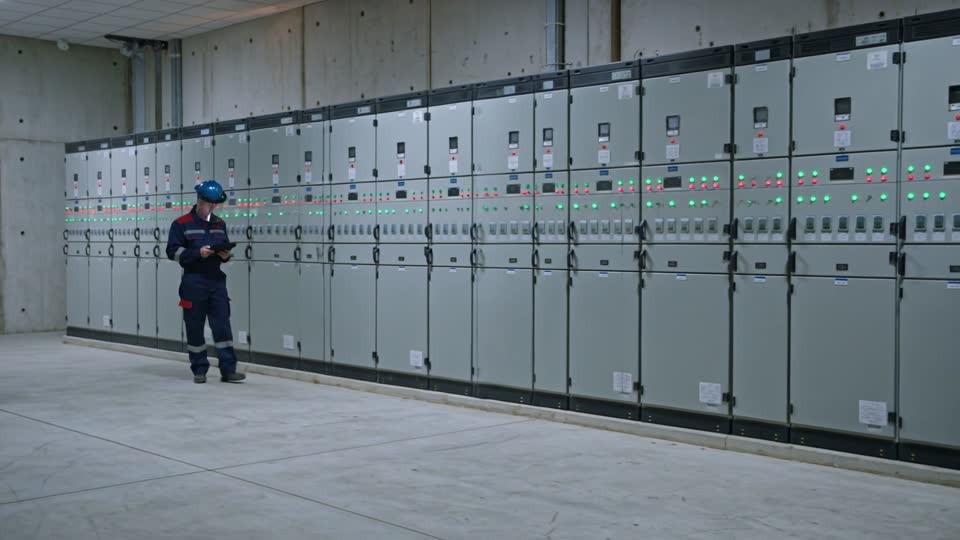
A plant shutdown plan is written with operations, not handed to them. It should state the isolation points, the sequence, who holds the locks, how long each system is down, which vendors must attend for restart, and the acceptance test that returns each line to production. Include temporary arrangements, such as a temporary feed to refrigeration, and the conditions for removing them.
If the utility must disconnect the service, ENMAX does not charge for a customer-requested temporary de-energization 17, but re-energization is billed at $166 per hour 17 and work outside weekday hours at $352 per hour 17. Weekend shutdowns are common in plants, so budget for the utility’s premium as well as the contractor’s.
Energized equipment and hazardous energy
Plant distribution, motor circuits and stored energy in drives and capacitors can injure or kill. This page is planning information, not instructions. Isolation, verification and any work near energized parts belong to qualified workers under the employer’s lockout and electrical safety procedures. For fire or a person in contact with electricity, call 911.
Questions people ask
Do I need an annual electrical permit for my plant in Calgary?
Is there a separate industrial electrician licence in Alberta?
How do I work out the electrical load for a new machine?
Start with the machine’s nameplate or the vendor’s electrical data: voltage, phase, full-load amps and the largest motor. The designer then checks the feeder, the protection and the effect of motor starting on the existing system, and compares the result with the plant’s spare capacity. A kVA calculator helps with conversions; it is not the design.
Who decides whether an area is a hazardous location?
The owner’s engineer or another qualified person, from the materials and processes used in the area. The classification then sets the equipment and wiring methods under Section 18 of the Canadian Electrical Code. Contractors install to the classification; they should not be asked to set it.
What electrical does a cold storage facility need?
Power and controls for the refrigeration plant, evaporators and condensing units, lighting rated for cold rooms, door heaters and heat tracing, alarms and monitoring, and dock equipment. Because product is at risk during outages, many owners also plan standby power or a temporary-feed arrangement for the refrigeration.
Does power factor affect my ENMAX bill?
Sources
- ENMAX Power Corporation Distribution Tariff - Customer Terms and ConditionsENMAX Power Corporation · Effective January 1, 2026; retrieved 2026-09-25
- ENMAX Power Corporation Distribution Tariff Rate Schedule - rates in effect as of July 1, 2026ENMAX Power Corporation · Rates in effect as of July 1, 2026 (DAS/SAS rates per AUC Decision 30299-D01-2025, effective January 1, 2026); retrieved 2026-09-25
- Occupational Health and Safety Code, Alta Reg 191/2021 (office consolidation)Alberta King's Printer · Consolidation current as of March 31, 2025 (amendments to AR 210/2024); retrieved 2026-09-25
- Technical Bulletin Issue No. 37: Arc Flash and Workplace Electrical SafetyGovernment of Alberta (Technical Services Branch) · Dated September 2009; retrieved 2026-09-25
- National Building Code - 2023 Alberta Edition, Volume 1, Division B, Appendix C, Table C-2 Climatic Design Data for Selected Locations in AlbertaAlberta Municipal Affairs / National Research Council of Canada · 2023 Alberta Edition, second printing incl. revisions and errata released April 2026
- Electrical permits for contractorsThe City of Calgary · retrieved 2026-09-25
- 2026 Building & Trade Permit Fee Schedule (R2026-02)The City of Calgary · 2026 fee schedule, revision R2026-02; retrieved 2026-09-25
- Electrical Permits and Inspections (dataset vxgy-id5s)The City of Calgary, Open Government Licence – City of Calgary · queried 2026-09-25
- Z463 - Maintenance of Electrical Systems (white paper)CSA Group · White paper dated July 2013; retrieved 2026-09-25
- Electrician - Trade profileGovernment of Alberta, Alberta Apprenticeship and Industry Training (Tradesecrets) · retrieved 2026-09-25
- About Master ElectriciansSafety Codes Council · retrieved 2026-09-25
- Industrial Electrician in Alberta | WagesJob Bank, Employment and Social Development Canada · Wages updated November 19, 2025 (reference period 2023-2024, Labour Force Survey); retrieved 2026-09-25
- Industrial electrician in Alberta | ProspectsJob Bank, Employment and Social Development Canada · Outlook 2025-2027 updated December 10, 2025; recent trends updated July 28, 2026; retrieved 2026-09-25
- Strategic Energy Management for Industry (SEMI)Emissions Reduction Alberta · retrieved 2026-09-25
- What is the Clean Technology ITCCanada Revenue Agency · Page modified 2025-12-22; retrieved 2026-09-25
- Commercial Clean Energy Improvement ProgramThe City of Calgary · retrieved 2026-09-25
- ENMAX Power Corporation Distribution Tariff, Terms and Conditions Fee ScheduleENMAX Power Corporation · Effective January 1, 2026
- Calgary Business Licenses (dataset vdjc-pybd)The City of Calgary, Open Government Licence – City of Calgary · queried 2026-09-25
Related
-
 E-201
Restaurants & commercial kitchens
Kitchen equipment circuits, hoods and make-up air, three-phase needs, fit-out permits and keeping a restaurant open during work.
-
 E-202
Condos & multi-family
Condo boards and apartment owners: common-area systems, suite metering, electrical rooms, EV charging and life safety.
-
 E-203
Warehouses & logistics
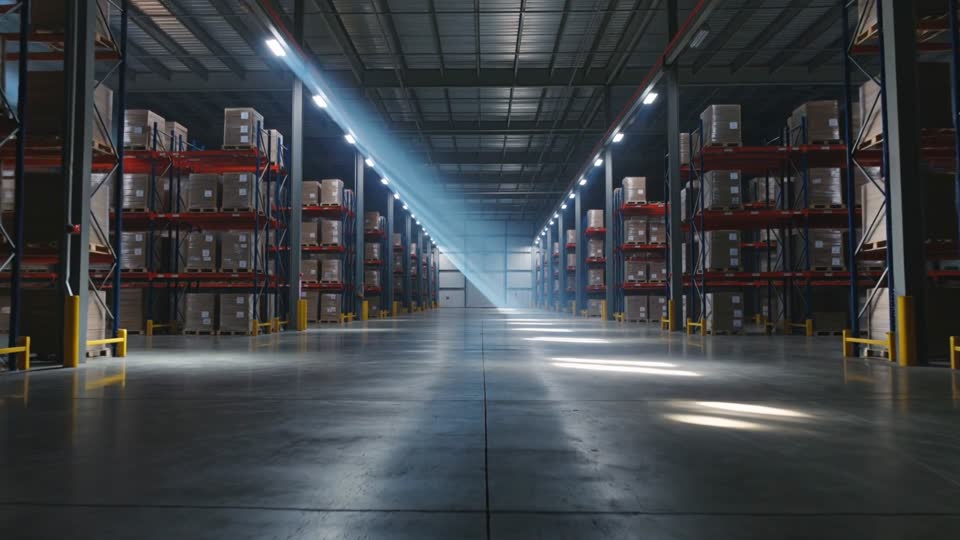
High-bay lighting, dock equipment, forklift and fleet charging, racking layouts and three-phase power in distribution space.