Service · E-102
Commercial electrical service upgrades in Calgary
A bigger main breaker is the visible part of a service upgrade. The work that sets cost and schedule sits on either side of it: the utility supply, the metering, the drawings and the shutdown.
CCT 01Find the limiting component first
A service is a chain: ENMAX’s transformer and supply, the service conductors, the metering, the main switch or switchboard, and the feeders and panels behind it. Usable capacity is set by the weakest link. Replacing the main breaker without checking the rest can leave a building with a larger nameplate and the same usable capacity.
Start with evidence of how the building actually runs:
- Demand history. ENMAX installs interval meters at sites planned at 150 kVA or more, and at existing sites once demand registers 150 kVA or more twice in twelve months,1 so larger buildings often already have the data. ENMAX bills demand in kVA, not kW, with a ratchet at 90% of the highest reading in the last 365 days.2
- An equipment survey. Nameplates, condition and ratings of the service equipment, the fault-current rating of what is installed, and the space around it.
- The proposed load. The EV chargers, rooftop units, kitchen line or process equipment that triggered the question, with nameplate data.
The service capacity calculator compares recorded peak demand with the service rating and the load you plan to add. It is planning arithmetic; the load calculation submitted with a permit is a separate, code-based exercise. Where the gap is small, managing load, for example by sharing capacity across EV chargers, can cost less than new equipment. Price both before anyone orders a switchboard.
CCT 02Who does what in a service upgrade
| Step | Owner or authorizer | Prepared or done by | Get in writing |
|---|---|---|---|
| Load study and demand data | Owner supplies bills, interval data and access | Engineer or electrical contractor | Existing peak, proposed load, resulting service size |
| Single-line diagram and drawings | Owner authorizes | Engineer or design-build contractor | Drawing revision used for pricing and for the permit |
| Utility application and estimate | Owner pays the customer contribution | Contractor or engineer submits; ENMAX designs its side | ENMAX’s written estimate of cost, investment and contribution |
| Utility-side facilities | ENMAX | ENMAX | The scope boundary and any civil work left to the customer |
| Meter socket or CT enclosure | Owner (customer-owned) | Electrical contractor installs | Acceptance against the ENMAX metering standard |
| Meter and CTs | ENMAX | ENMAX; contractors do not handle meters | Metering arrangement on the approved drawings |
| Switchboard, feeders and panels | Owner | Electrical contractor | Ratings, submittals and delivery dates |
| Electrical permit and inspection | City of Calgary | Master electrician applies | Permit number, inspection results, release |
| Energization | ENMAX, after inspection approval | Requested through the retailer | Booking date and the fallback if it slips |
| Shutdown plan and tenant notices | Owner or property manager | Contractor supplies the method | Notice periods, restart list, temporary power |
The lines that go wrong are the handoffs: an estimate that assumed the customer would trench, a switchboard ordered before ENMAX confirmed the metering arrangement, or an energization booked before the inspection is done. Assign each row to a named person before the shutdown date is set.
CCT 03The ENMAX side: estimate, investment and metering
ENMAX Power owns the wires in Calgary and charges its distribution tariff to every customer, whichever retailer sells the energy.3 It designs and prices the utility side of a service change individually. There is no flat commercial upgrade fee. The customer pays by formula: removal cost less salvage, plus installation cost, less ENMAX’s investment in new load, plus 20% prepaid operation and maintenance on optional facilities, plus other costs.1 ENMAX gives a written estimate of the cost, its investment and the customer contribution, broken down by component when the estimated cost exceeds $25,000.1
The investment is a credit against eligible utility cost, not a price for the upgrade. For 2026 it is $14,675 per meter for small commercial (D200) new load.4 Medium and large commercial (D300 and D310) customers may instead take $367, $245 or $122 per kVA of minimum contract demand on 15-, 10- or 5-year agreements, up to 80% of anticipated maximum demand.4 A longer agreement earns a larger credit and commits the site to that demand, so the owner, not the contractor, should make that call.
Above 200 A, ENMAX requires a CT request form and a CT meter installation checklist.5 The customer provides, owns and installs a CSA-approved meter socket or enclosure,6 and ENMAX restricts contractors from handling meters.7 The site must be approved by the inspection authority before ENMAX energizes it, and energization is requested through the retailer.5 The ENMAX connection guide and the CT metering explainer walk through each document.
CCT 04Drawings, permits and the code edition
Calgary requires plans and drawings for new construction or service upgrades of 600 A and higher, including all high-voltage installations.7 For those services, the single-line diagram or shop drawings must show the fault current at every overcurrent device, the service characteristics and ratings, and any series-rated combinations.7 That is why an upgrade at that size usually starts with an engineer or a design-build contractor, and why the same fault-current figures later feed an arc flash study.
The permit is an electrical trade permit applied for by a master electrician. The fee is $112 plus $9.79 per $1,000 of construction value, plus the Safety Codes Council fee,8 and additional plans review on non-residential permits is charged at $119 per hour.8 Installations permitted on or after April 1, 2025 must meet the 2024 Canadian Electrical Code; work permitted earlier under the 2021 edition remains compliant.9
The commercial permits guide covers inspections and plans review, and the 120/208 V vs 347/600 V guide explains why larger buildings choose one distribution voltage over the other, which changes the amperage a given load needs.
CCT 05Planning the shutdown
Almost every service upgrade ends with the building off. The shutdown is where the schedule, the tenants and the utility meet, and it needs its own plan with a named coordinator.
- Utility booking. ENMAX needs at least 3 business days’ notice to schedule disconnect and reconnect work.10 A customer-requested temporary de-energization is free of charge,11 re-energization is $166.00 per hour,11 and work the customer requires outside 7:00 a.m. to 4:00 p.m. on weekdays is $352.00 per hour.11
- Inspection before reconnection. ENMAX may require the permit and a completed inspection, or an emailed authorization from City electrical inspections, before it reconnects.10 If energization fails because of deficient equipment, unsafe conditions or code non-compliance, an extra service trip costs $90.00.11
- Temporary power. Decide what must keep running: life-safety systems, freezers, servers, elevators, heat. Calgary’s January design temperature is −30 °C,12 so a winter outage plan must cover heating, heat tracing and anything that can freeze.
- Restart. List every load to restore, in order, with someone responsible for checking fire alarm panels, elevators and building automation afterwards.
Energized equipment
Service equipment is where available fault current is highest. Only qualified workers under an employer’s safety program should open, isolate or test it, and Alberta’s OHS Code requires hazardous energy to be isolated with a secured energy-isolating device before equipment is serviced.13 Plan the shutdown rather than asking for work to be done live. This page is planning information, not a procedure.
CCT 06How more load changes the power bill
A larger service does not change the price of a kilowatt-hour; the rate class does, and it follows consumption and demand. ENMAX’s D200 class is for sites using less than 5,000 kWh a month.2 D300 applies to sites using at least 5,000 kWh a month in six of the last 12 invoice periods, as long as demand above 150 kVA was not registered twice in the previous 365 days.2 A site that does register it twice, at secondary voltage, moves to D310.2
Two billing rules matter when load is added. Billing demand is the greatest of metered, ratchet or contract demand, and the ratchet is 90% of the highest kVA demand in the last 365 days,2 so one high month holds the bill up for a year. And ENMAX expects customer equipment to keep a power factor of at least 90%, and may require corrective equipment at the customer’s cost if it does not.1
ENMAX quotes its delivery charges per day, for example a D310 service charge of $26.041806 per day,2 and those charges exclude energy, the City’s local access fee and riders. Energy prices are a retail question and are separate from the electrical work.
CCT 07What drives the budget
Ask bidders to separate the lines that behave differently:
- ENMAX customer contribution, from the utility estimate, net of investment.
- Engineering and drawings, including the single-line diagram, fault-current figures and any coordination study.
- Service equipment, where manufacturer lead times usually drive the schedule more than installation does.
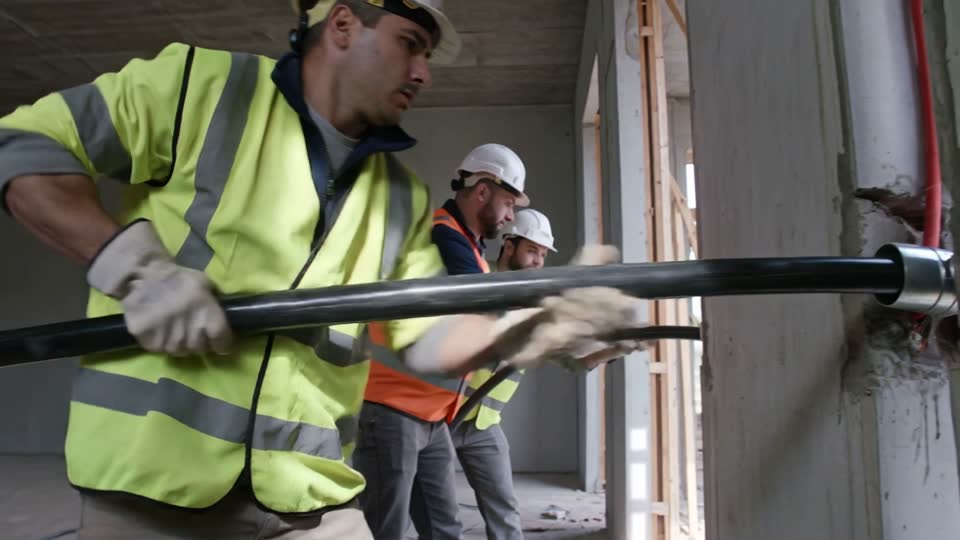
- Installation, including feeders, cable routes, core drilling and electrical-room work.
- Civil and restoration, such as trenching, pads, bollards and landscaping.
- Shutdown and temporary operations, including after-hours premiums and rental generators.
- Permits and fees, which scale with the whole construction value, labour and material.8
Existing electrical-room space often decides the design: new switchgear that does not fit the old room means a new room, and that is a building project. Statistics Canada’s electrical-division index for Calgary non-residential buildings rose 1.0% in the year to the second quarter of 2026;14 it tracks contractors’ input costs and is not a price. The service upgrade and switchgear cost guide goes line by line, and switchgear and transformers covers the equipment choices.
CCT 08Buildings that face this decision
Service upgrades cluster where load is being added to buildings designed for less: plants adding motors and process lines, warehouses electrifying forklifts and fleets, and managed properties fielding tenant expansions and parkade EV charging. For a house panel or a residential service, the homeowner guidance at CalgaryElectricians.ca is the better fit.
At handover, keep the accepted ENMAX scope, the final single-line diagram, protective settings, test records, the inspection release and updated operating instructions together. Record the new service rating and metering arrangement where the next person will look: the next tenant fit-out or EV application will ask for them first.
Questions people ask
Is 400 amp service three-phase?
Not necessarily. The amp rating describes how much current the service can carry; the number of phases and the voltage are separate choices. A commercial 400 A service can be single-phase or three-phase, and at 120/208 V or 347/600 V it delivers very different amounts of power. At that rating ENMAX requires CT metering, because it is above 200 A.5 The three-phase kVA calculator converts between amps and kVA at both voltages.
How much does a 400 amp service upgrade cost?
No official source publishes a price, and ENMAX has no flat fee for it. The total is three different things: ENMAX’s customer contribution from its written estimate, net of its investment credit; the contractor’s and engineer’s price for equipment, installation and drawings; and the City permit fee of $112 plus $9.79 per $1,000 of construction value.8 Ask for each as a separate line, because each changes for different reasons.
Why would you need a 400 amp service?
Because demand data and a load calculation show the existing service cannot carry the load you plan to add: EV chargers, a kitchen line, rooftop units, a process expansion or a change of use. Before committing, check whether the limit is really the service or a downstream feeder, and whether load management would close the gap. A new service is the right answer when neither alternative holds up.
What does ENMAX do?
ENMAX Power owns and operates the distribution wires in Calgary. It connects and meters sites, designs the utility side of new and upgraded services, and charges its AUC-approved distribution tariff to every customer, whatever retailer sells the energy.3 Energy itself is bought from a retailer; a new ENMAX site ID can take up to 48 hours to become available to retailers.5
Does 400 amp service cost more per kWh?
No. Service size does not set the energy price. ENMAX’s delivery rate class depends on consumption and demand: under 5,000 kWh a month is D200,2 and demand above 150 kVA registered twice in 365 days moves a secondary-voltage site to D310.2 A larger service makes higher demand possible, and demand charges, billed per day per kVA, follow what the building actually draws.
Sources
- ENMAX Power Corporation Distribution Tariff - Customer Terms and ConditionsENMAX Power Corporation · Effective January 1, 2026; retrieved 2026-09-25
- ENMAX Power Corporation Distribution Tariff Rate Schedule - rates in effect as of July 1, 2026ENMAX Power Corporation · Rates in effect as of July 1, 2026 (DAS/SAS rates per AUC Decision 30299-D01-2025, effective January 1, 2026); retrieved 2026-09-25
- Tariffs and feesENMAX Power Corporation · retrieved 2026-09-25
- ENMAX Power Corporation Distribution Tariff, Terms and Conditions Investment Level ScheduleENMAX Power Corporation · Effective January 1, 2026 (applies January 1 to December 31, 2026)
- Get the power flowingENMAX Power Corporation · retrieved 2026-09-25
- ENMAX Power Corporation Distribution Tariff Customer Terms and ConditionsENMAX Power Corporation · effective 2026-01-01
- Electrical permits for contractorsCity of Calgary · retrieved 2026-09-25
- 2026 Building & Trade Permit Fee Schedule (R2026-02)City of Calgary · 2026 schedule R2026-02
- Notice: New Canadian Electrical Code, Part 1 (April 2025)Alberta Municipal Affairs · April 2025
- Temporary disconnect / reconnectENMAX Power Corporation · retrieved 2026-09-25
- ENMAX Power Corporation Distribution Tariff, Terms and Conditions Fee ScheduleENMAX Power Corporation · Effective January 1, 2026
- National Building Code - 2023 Alberta Edition, Volume 1, Division B, Appendix C, Table C-2 Climatic Design Data for Selected Locations in AlbertaAlberta Municipal Affairs / National Research Council of Canada · 2023 Alberta Edition, second printing incl. revisions and errata released April 2026
- Occupational Health and Safety Code, Alta Reg 191/2021 (office consolidation)Alberta King's Printer · Consolidation current as of March 31, 2025 (amendments to AR 210/2024); retrieved 2026-09-25
- Table 18-10-0289-01 Building construction price indexes, by type of building and divisionStatistics Canada · Q2 2026 (April-June 2026); released 2026-07-24; derived 2026-09-25
Related
-
 E-101
Tenant improvements
Office, retail and restaurant fit-outs: what the base building provides, what the tenant’s electrical scope covers, the drawings and the permits.
-
 E-103
Three-phase power
New three-phase services and single-to-three-phase conversions for equipment, kitchens, shops and EV charging.
-
 E-104
Switchgear & transformers
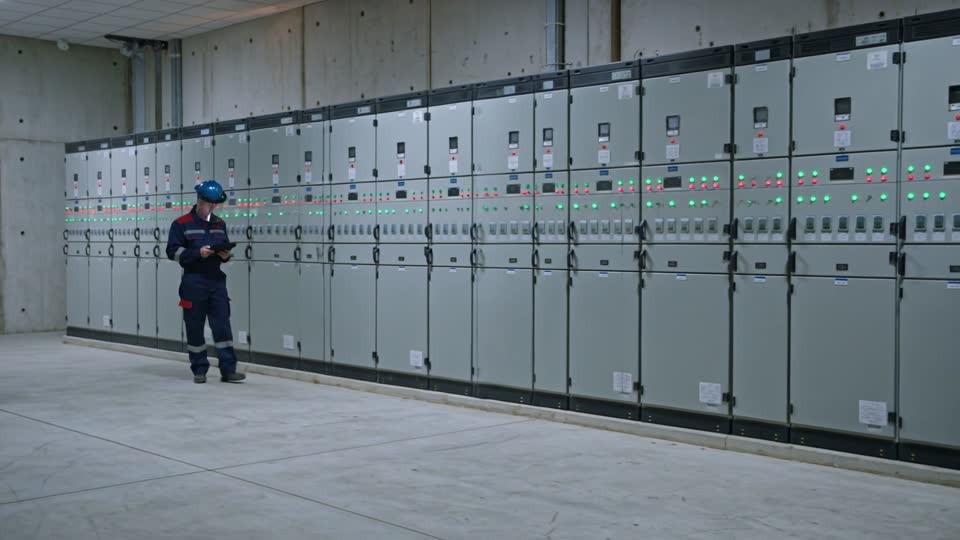
Switchgear, switchboards, panelboards and transformers: replacement, coordination with the utility, lead times and shutdown planning.