
Service · E-114
Infrared thermography of electrical equipment in Calgary
A thermal scan is worth what happens after it. Plan the load, the access and the repairs before anyone points a camera at a panel.
CCT 01What an infrared scan finds, and what it misses
Electrical faults often announce themselves as heat before they fail. A connection that has loosened or corroded, a breaker with worn contacts or an overloaded conductor runs hotter than its neighbours, and an infrared camera shows that difference without touching anything. Typical findings:
- loose, corroded or undersized terminations on breakers, lugs, bus joints and fuse clips;
- one phase running hotter than the other two, pointing to imbalance or a high-resistance connection;
- neutrals heated by harmonic current from drives, UPS systems and LED drivers;
- overloaded feeders, transformers and motor starters;
- blocked ventilation and failed cooling fans in transformers and drives.
The limits matter just as much. A camera sees surfaces, not the inside of a closed enclosure. It sees nothing on a circuit that is not carrying load. It does not test whether a breaker will trip, and it cannot prove that a connection it did not see is sound. Bare copper and aluminium reflect heat like a mirror, so readings on shiny metal need judgment. Thermography is one input to a maintenance program, not a clean bill of health.
CCT 02When to scan: load, season and timing
Heat follows current, so a scan should happen when the equipment carries a representative load. A panel scanned on a quiet Saturday morning can look perfect and fail on Monday afternoon. Set the timing from evidence:
- Interval data. ENMAX installs interval meters at sites planned at 150 kVA or more and at existing sites once demand registers 150 kVA or more twice in twelve months.1 That history shows when the building actually peaks.
- Rate periods. For D310 and D410 sites, ENMAX defines on-peak as 8 a.m. to 9 p.m. on weekdays, excluding statutory holidays,2 which is a sensible starting window for most commercial buildings.
- Season. Electric heat, parkade block-heater receptacles and make-up air heaters load their circuits in winter; cooling loads peak in summer. Scan the circuits in the season they work hardest.
- Before a shutdown. A scan a few weeks before a planned outage lets repairs be made while the equipment is already off.
- After changes and repairs. Scan after new load is added, and again after repairs to prove they worked.
How often to scan is set by the owner’s maintenance program, the criticality of the equipment and, often, the insurer. CSA describes Z463, the Canadian electrical maintenance guideline, as voluntary,3 so no Alberta rule fixes an interval. Ask the insurer what it expects before setting one.
CCT 03Who does what in a thermography program
| Task | Owner or facility manager | Thermographer | Electrician or qualified worker |
|---|---|---|---|
| Equipment list and scope | Supplies the asset list and priorities | Confirms what can be scanned | Flags equipment that needs covers removed |
| Load at time of scan | Schedules the scan for representative load | Records load and ambient | Reads currents where needed |
| Access and covers | Arranges rooms, keys and escorts | Does not remove covers unless qualified | Opens equipment under the employer’s safety program |
| Survey and images | Not involved | Captures thermal and visual images | Assists |
| Report and severity ranking | Receives and reviews | Writes, with stated criteria | Comments on practical repairs |
| Repair planning | Approves, schedules shutdowns | Clarifies findings | Quotes and plans repairs |
| Repairs | Pays; arranges utility disconnects | Not involved | Isolates, repairs and restores under permit where required |
| Rescan and close-out | Records closure in the asset register | Rescans under load | Corrects anything still hot |
Many scans are done by an electrical contractor’s own thermographer, which puts two rows in one company. That is convenient, but ask for the findings and the repair quote as separate documents so the report can be read on its own.
CCT 04Opening energized equipment is the hazard
Most useful scans require covers off equipment that is energized and loaded, which is exactly the condition in which shock and arc flash hazards are highest. Alberta’s OHS Code handles hazardous energy in Part 15: before equipment is serviced, repaired, tested, adjusted or inspected, the energy must be isolated with a secured energy-isolating device.4 A scan cannot be done de-energized, so the employer’s electrical safety program has to decide how the covers come off, who removes them and with what protection.
The OHS Code does not adopt CSA Z462. A 2009 Alberta bulletin recommended it to facility managers,5 and the current edition is CSA Z462:24.6 Most employers whose staff open live equipment use it as their framework, and the labels from an arc flash study tell the thermographer what protection each piece of equipment calls for. The arc flash requirements guide covers the legal background.
The engineering answer is to reduce how often covers come off. Infrared viewing windows or ports, installed during a planned shutdown, let the thermographer scan through the enclosure door.
Energized equipment
Removing panel covers and switchgear doors exposes workers to shock and arc flash. Only qualified workers under the employer’s safety program should open energized equipment; building staff should never remove covers to help a scan along. A thermal report identifies problems; it does not authorize energized repair work. This page is planning information, not a procedure.
CCT 05What a useful report contains
A colourful image with a temperature on it is hard to act on. A report worth paying for gives, for each finding:
- the equipment’s identity and location, matching the panel directory or asset register;
- the thermal image and a visual photograph of the same view;
- the measured load at the time of the scan, per phase where it matters, and the ambient temperature;
- the temperature rise, compared with similar components under similar load or with ambient;
- a severity ranking with the criteria stated, so two reports can be compared;
- a recommended action and how urgent it is.
It should also list what was not scanned and why: locked rooms, equipment too lightly loaded, covers that could not safely be removed. An unscanned item is a gap, not a pass. Ask for the thermographer’s training and certification, and for a sample report, before awarding the work.
CCT 06From finding to repair to rescan
Findings are fixed de-energized. The OHS Code gives each worker isolating hazardous energy a personal lock with a unique mark or tag,4 and requires the worker to confirm the equipment is inoperative or otherwise safe before working on it.4 That means repairs are planned into shutdowns, grouped by panel, and coordinated with tenants and operations.
Repairs on the building side are electrical work under a permit where the City requires one. Calgary requires an annual electrical permit where a facility employs a full-time journeyman electrician, and a contractor doing maintenance at a facility may also apply for one;7 it costs $162.24 a year.8 Where the problem is on the service conductors or the main, only ENMAX can disconnect: contractors are restricted from handling meters and cutting secondary supply connections.7 A customer-requested temporary de-energization is free,9 but re-energization costs $166.00 per hour9 and off-hours work $352.00 per hour.9 The ENMAX guide covers that process, and the commercial permits guide covers permits.
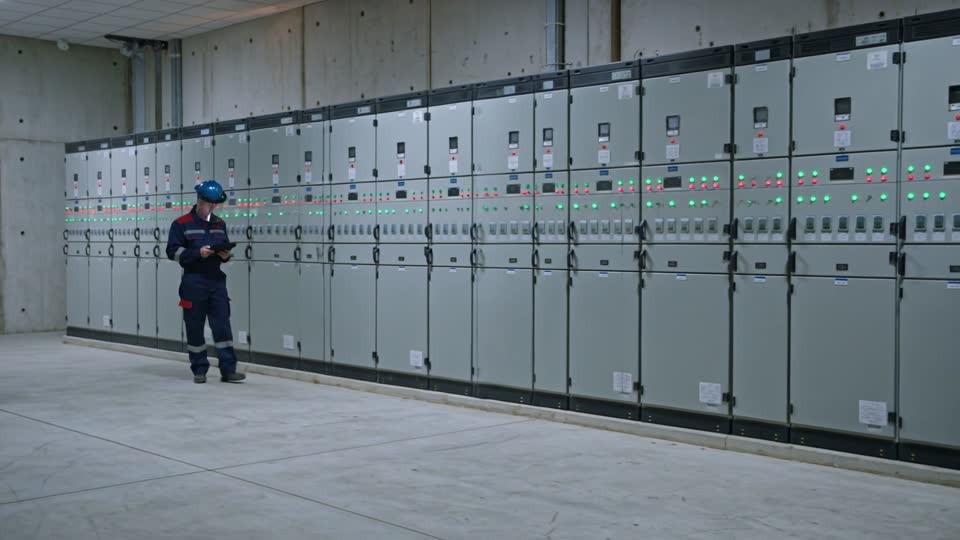
Close each finding by rescanning under comparable load. Without the second image the repair is an assumption. Findings that trace back to overload rather than a bad connection are design problems: check the feeder’s real demand against its rating with the service capacity calculator before simply tightening lugs.
CCT 07Where thermography fits in a maintenance program
Thermography finds heat; it does not clean, torque or test. It works best alongside preventive maintenance: the scan identifies which connections to open during the next shutdown, and the shutdown confirms what the scan suggested. Keep the images from each round so the same breaker can be compared year to year, and store them against the asset register rather than in an email.
Facilities with in-house electricians already sit in the City’s annual permit system: the City issued 232 annual facility electrical permits in 2025.10 That count is permits, not scans, and the City’s data carries no record of thermography. Contains information licensed under the Open Government Licence – City of Calgary.
The buildings that gain most are those where an unplanned outage is expensive: plants and manufacturing with motor control centres, data centres with UPS and distribution that rarely shut down, and property portfolios where one report format across many buildings makes priorities visible.
CCT 08What moves the price
No official source publishes thermography prices. Quotes follow effort:
- the number of panels, switchboards, transformers and motor control centres in scope, and the number of sites;
- whether an electrician is included to open covers, or the owner must provide one;
- after-hours or peak-hour scheduling to catch representative load;
- the report format, asset tagging and severity criteria;
- rescans after repair, and whether they are priced now or later;
- infrared windows, if they are to be installed during a shutdown.
Compare bids on the same equipment list and the same deliverables. The arc flash study and thermography cost guide covers the drivers alongside arc flash work, which is often bought at the same time.
Questions people ask
What is infrared thermography of electrical systems?
It is a non-contact survey of energized, loaded electrical equipment with an infrared camera, looking for components running hotter than they should. Hot spots usually point to loose or corroded connections, overloads, imbalance or failing parts. The result is a report listing each finding with images, load data, a severity ranking and a recommended repair.
How often should infrared thermography be done?
No Alberta rule sets an interval; CSA describes its Z463 maintenance guideline as voluntary.3 The interval is set by the owner’s maintenance program, how critical the equipment is and what the insurer expects. Scan in the season and at the time of day when the equipment carries its heaviest load, and rescan after repairs.
How much does infrared thermography cost?
No official source publishes a price. The cost follows the equipment count and number of sites, whether electrician support to open covers is included, scheduling at peak or after hours, the report format and any rescans. Ask each bidder to price the same equipment list and to show a sample report.
What does an infrared scan of an electrical panel show?
It shows the surface temperatures of breakers, lugs, conductors and bus with covers off, so a termination running hotter than its neighbours stands out. It cannot see inside closed components, detect problems on circuits carrying no load, or confirm a breaker will trip. Read the finding alongside the load recorded at the time.
Where can I get electrical thermography in Calgary?
It is offered by specialist thermography firms and by electrical contractors and maintenance companies with trained thermographers. Ask for the thermographer’s certification, a sample report, whether electrician support is included and how findings are ranked. This site does not rank providers; a brief sent through the request form is read by a person, who replies.
Sources
- ENMAX Power Corporation Distribution Tariff - Customer Terms and ConditionsENMAX Power Corporation · Effective January 1, 2026; retrieved 2026-09-25
- ENMAX Power Corporation Distribution Tariff Rate Schedule - rates in effect as of July 1, 2026ENMAX Power Corporation · Rates in effect as of July 1, 2026 (DAS/SAS rates per AUC Decision 30299-D01-2025, effective January 1, 2026); retrieved 2026-09-25
- Z463 - Maintenance of Electrical Systems (white paper)CSA Group · White paper dated July 2013; retrieved 2026-09-25
- Occupational Health and Safety Code, Alta Reg 191/2021 (office consolidation)Alberta King's Printer · Consolidation current as of March 31, 2025 (amendments to AR 210/2024); retrieved 2026-09-25
- Technical Bulletin Issue No. 37: Arc Flash and Workplace Electrical SafetyGovernment of Alberta (Technical Services Branch) · Dated September 2009; retrieved 2026-09-25
- CSA Z462:24 Workplace Electrical Safety - Online TrainingCSA Group · retrieved 2026-09-25
- Electrical permits for contractorsThe City of Calgary · retrieved 2026-09-25
- 2026 Building & Trade Permit Fee Schedule (R2026-02)The City of Calgary · 2026 fee schedule, revision R2026-02; retrieved 2026-09-25
- ENMAX Power Corporation Distribution Tariff, Terms and Conditions Fee ScheduleENMAX Power Corporation · Effective January 1, 2026
- Electrical Permits and Inspections (dataset vxgy-id5s)The City of Calgary, Open Government Licence – City of Calgary · queried 2026-09-25
Related
-
 E-101
Tenant improvements
Office, retail and restaurant fit-outs: what the base building provides, what the tenant’s electrical scope covers, the drawings and the permits.
-
 E-102
Commercial service upgrades
Raising a building’s service: capacity checks, the ENMAX application and investment, CT metering, drawings and the shutdown.
-
 E-103
Three-phase power
New three-phase services and single-to-three-phase conversions for equipment, kitchens, shops and EV charging.