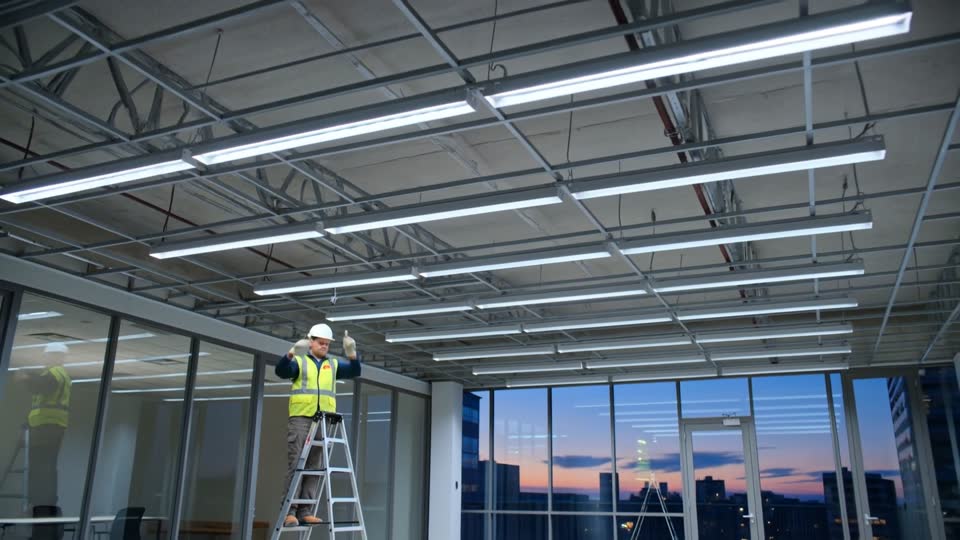
Service · E-112
Fire alarm and emergency lighting inspections in Calgary
An annual inspection produces a report, not a compliant building. Compliance comes from closing the deficiencies the report lists and keeping the records that prove it.
CCT 01Who is responsible for fire alarm testing
Calgary Fire Department’s maintenance guide for the 2023 Alberta edition of the National Fire Code, NFC(AE), puts the code’s maintenance provisions on the owner or the owner’s authorized agent unless otherwise specified.1 “Owner” is wider than the title holder: under the Safety Codes Act it includes a lessee and anyone in care and control, so a commercial tenant can carry fire-safety maintenance duties.1 A lease that assigns the work to the landlord settles who pays; it does not stop the fire department from looking to whoever controls the space.
The testing itself is for qualified people. Only qualified persons under the fire code may do the annual fire alarm inspection, testing and maintenance. Calgary says that typically means a journeyperson electrician, a certified fire alarm technician or another qualified person, while trained building operators may do the daily and monthly checks.1
In practice the work splits along trade lines. A fire alarm technician tests the devices, panel and programming to the inspection standard. An electrician deals with the power: the panel’s supply circuit, emergency lighting heads and battery units, exit signs, electromagnetic lock wiring and the circuit repairs a report identifies. Many buildings need both, so the scope should say which company does what.
CCT 02The inspection calendar in one table
| System | Interval | Basis | Usually performed by | Record to keep |
|---|---|---|---|---|
| Fire alarm, annual inspection and test | Within 12 months of the previous annual inspection1 | NFC(AE) Section 6.3 and CAN/ULC-S536:20191 | Fire alarm technician or journeyperson electrician | Signed annual report with the device list |
| Fire alarm, routine checks | Daily and monthly items | CAN/ULC-S536 | Trained building operator | Logbook entries |
| Smoke detector sensitivity | Mandatory, not deferred2 | Fire Marshal bulletin, March 5, 2025 | Fire alarm technician | Sensitivity results in the report |
| Self-contained emergency lighting units | Monthly | NFC(AE) 6.5.1.61 | Trained operator or electrician | Monthly test log |
| Other emergency lighting and exit signs | Annually | NFC(AE) Section 6.5 | Electrician or qualified technician | Annual report |
| Emergency generators | Monthly, 6-month, annual and 5-year tasks1 | CSA C282, in the edition the fire code references | Generator service technician | Test and maintenance records |
| Electromagnetic locks | At most 12 months apart; report kept 2 years1 | NFC(AE) | Journeyperson electrician or fire alarm technician | Itemized, signed report |
| Deficiencies | Reported within 10 business days of the initial inspection2 | Calgary Fire Department expectation | Service company | Deficiency notice and repair evidence |
A note on editions: Calgary’s guide still cites CSA C282-15 for generators, while CSA’s current edition is C282:24.3 Follow the edition the fire code references and confirm it with the generator service provider. The fire alarm and emergency lighting rules guide covers the code background.
CCT 03The 2025 change on smoke detector sensitivity
If an older report says smoke detector sensitivity testing was deferred, it is out of date. Calgary Fire Department’s 2024 maintenance guide still describes a STANDATA that allowed sensitivity testing to be delayed. The Fire Marshal’s bulletin of March 5, 2025 says that STANDATA was not renewed under the 2023 fire code, and that smoke detector sensitivity and battery testing are mandatory.2
For owners, the annual scope should include sensitivity testing of every smoke detector, and a bid that omits it cannot be compared with one that includes it. Ask how the test is performed, whether detectors that fail will be replaced on the same visit or quoted separately, and how the results appear in the report.
CCT 04What an inspection visit involves
A well-run annual inspection is planned before anyone arrives:
- Send the previous report and deficiency list to the service company, with the device inventory and drawings if they exist.
- Agree which systems are in scope: fire alarm, emergency lighting, exit signs, electromagnetic locks, the generator, and ancillary functions such as fan shutdown or elevator recall.
- Notify occupants and tenants, arrange suite access, and tell the monitoring provider when the system will be in test.
- Test and record device by device, noting anything that could not be reached.
- Receive a signed report that separates passed devices, deficiencies and inaccessible items.
Inaccessible devices are the weak point. A locked tenant suite or a storage room stacked to the ceiling becomes an untested device, and an untested device is a gap in the record. Treat access as part of the owner’s scope, and book the return visit.
Life safety systems in test
Testing sounds alarms and can release door locks, shut down air handlers and recall elevators, and parts of the building may be unprotected for a time. Coordinate with the monitoring provider and occupants, and follow the fire department’s requirements if a system has to be taken out of service. Repairs to supply circuits, battery units and panels are energized-equipment work for qualified trades only. This page is planning information, not a test procedure.
CCT 05Turning the report into closed deficiencies
Calgary Fire Department expects service companies to report deficient fire protection systems within 10 business days of the initial inspection.2 From then on the report is a work list, and the owner’s job is to give every item a responsible party, a date and proof of closure.
Repairs fall into two groups. Replacing a failed emergency lighting battery, a lamp head or an exit sign like for like is generally handled as a repair. Changes to the fire alarm system itself, such as adding or relocating devices, replacing a panel or reprogramming, are alterations. In Calgary those need both a building permit and an electrical permit,4 drawings or letters stamped by a professional engineer where the building requires professional involvement,5 and verification to CAN/ULC-S537.6 That work is covered on the fire alarm systems page and in the commercial permits guide.
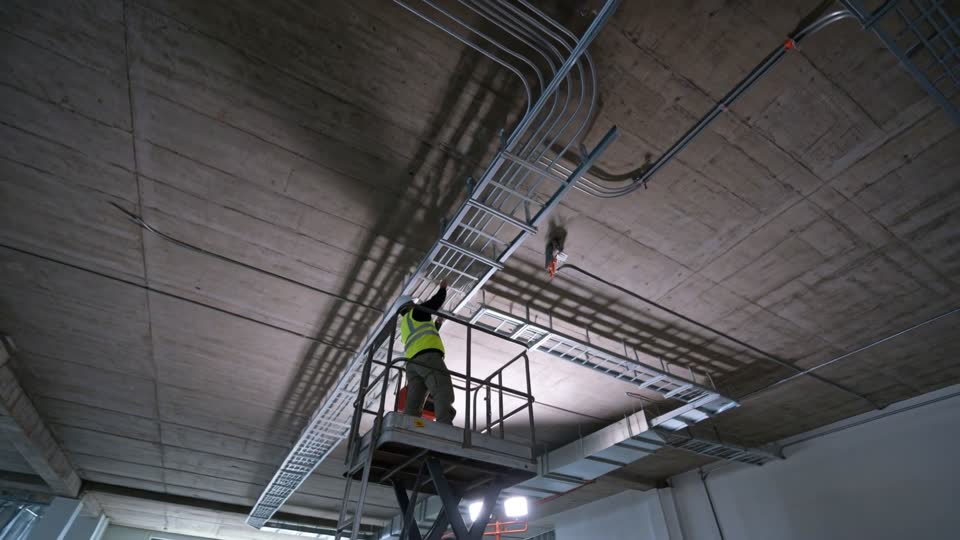
Close each item with evidence: a retest result, a photo of the new unit with its date code, or the verification report. A deficiency marked “quoted” is not closed.
CCT 06Fire alarm work in Calgary’s permit data
Fire alarm electrical permits issued by the City of Calgary more than doubled, from 204 in 2019 to 446 in 2025,7 and the City also issued 232 annual facility electrical permits in 2025.7 Those counts are installations and alterations under permit. They are not annual inspections: the City’s dataset tracks electrical permits and the City’s inspections of permitted work, while annual S536 inspections are performed by service companies and recorded in each building’s own files.
Contains information licensed under the Open Government Licence – City of Calgary. More breakdowns are on the Calgary commercial electrical data page.
CCT 07What sets the price of an inspection contract
No public schedule prices fire alarm inspections. Quotes vary with:
- the number and type of devices, including supervisory and flow switches, duct detectors and ancillary relays;
- the number of suites that need access, and whether return visits for locked units are included;
- the emergency lighting count, and whether failed battery units are replaced on the visit or quoted separately;
- after-hours testing in buildings that cannot tolerate daytime alarms;
- generator and electromagnetic lock testing, where they are bundled;
- the report format and how deficiencies are quoted.
Compare scopes before totals. A low annual price that excludes batteries, lifts, return visits or sensitivity testing stops looking low once the deficiency list arrives. The fire alarm and emergency lighting cost guide covers the drivers in more detail.
CCT 08Records, and the buildings that carry the most
Keep signed annual reports, monthly logs, deficiency lists and repair evidence in one place that survives a change of property manager or service company. Electromagnetic lock tests, due at least every 12 months, need an itemized signed report kept for 2 years,1 and the next inspector will ask for the last report before starting.
The load is heaviest where systems are large and occupants many: property and facility managers running portfolios, condo boards arranging suite access, and clinics where alarms cannot interrupt patients without warning. Generators on the same calendar are covered under generators and transfer switches, and the generator sizing calculator helps where a unit is being replaced.
Questions people ask
How often do fire alarms need to be inspected?
Who does fire alarm inspections?
Qualified persons under the fire code, which Calgary says typically means a journeyperson electrician, a certified fire alarm technician or another qualified person.1 The owner, or whoever is in care and control, arranges and pays for the work. Alberta’s Tradesperson Lookup Tool lets the public check whether someone holds an Alberta-issued trade certificate.8
How often should emergency lighting be tested?
Self-contained emergency lighting units, the kind with their own battery, are inspected and tested monthly; other emergency lights and exit signs are inspected annually, under NFC(AE) 6.5.1.6 to 6.5.1.8.1 Record each test so the annual inspector can see the history.
How long does a fire alarm inspection take?
No official duration exists; it depends on the number of devices, the number of suites needing access, the systems in scope and whether testing must happen after hours. A service company can estimate from the device inventory and the last report. Ask whether the visit will span several days and plan occupant notices and suite access to match.
What happens if a business fails a fire inspection?
The deficiencies are written up, and Calgary Fire Department expects service companies to report deficient systems within 10 business days of the initial inspection.2 The owner, including a tenant in care and control, remains responsible for correcting them. Arrange repairs promptly, keep evidence of each fix, and book any retest the report calls for.
How much does a fire alarm inspection cost?
No public price schedule exists. The price follows device count, suite access, emergency lighting count, after-hours requirements, bundled generator or lock testing, and how deficiencies and batteries are handled. Ask each bidder to price the same device list and to state exclusions, and compare the deficiency process as well as the annual total.
Sources
- Fire Safety Maintenance Requirements (Calgary Fire Department Inspections)The City of Calgary (Calgary Fire Department) · Latest revision May 1, 2024 (NFC(AE) 2023); retrieved 2026-09-25
- Fire Marshal Bulletin March 5, 2025-001: Fire Alarm ReportingThe City of Calgary (Calgary Fire Department, Fire Marshal's Office) · Issued March 5, 2025; retrieved 2026-09-25
- CSA C282:24 Emergency electrical power supply for buildings (store listing)CSA Group · retrieved 2026-09-25
- Electrical permits for contractorsCity of Calgary · retrieved 2026-09-25
- Complete Building Permit Application Requirement List - Commercial: Fire Alarm (repair/upgrading)City of Calgary · retrieved 2026-09-25
- STANDATA interpretation 23-BCI-011/24-ECI-009/23-FCI-006 Existing fire alarm systemsAlberta Municipal Affairs · March 2025
- Electrical Permits and Inspections (dataset vxgy-id5s)The City of Calgary, Open Government Licence – City of Calgary · queried 2026-09-25
- Tradesperson Lookup ToolGovernment of Alberta (Tradesecrets) · retrieved 2026-09-25
Related
-
E-101
Tenant improvements
Office, retail and restaurant fit-outs: what the base building provides, what the tenant’s electrical scope covers, the drawings and the permits.
-
 E-102
Commercial service upgrades
Raising a building’s service: capacity checks, the ENMAX application and investment, CT metering, drawings and the shutdown.
-
 E-103
Three-phase power
New three-phase services and single-to-three-phase conversions for equipment, kitchens, shops and EV charging.