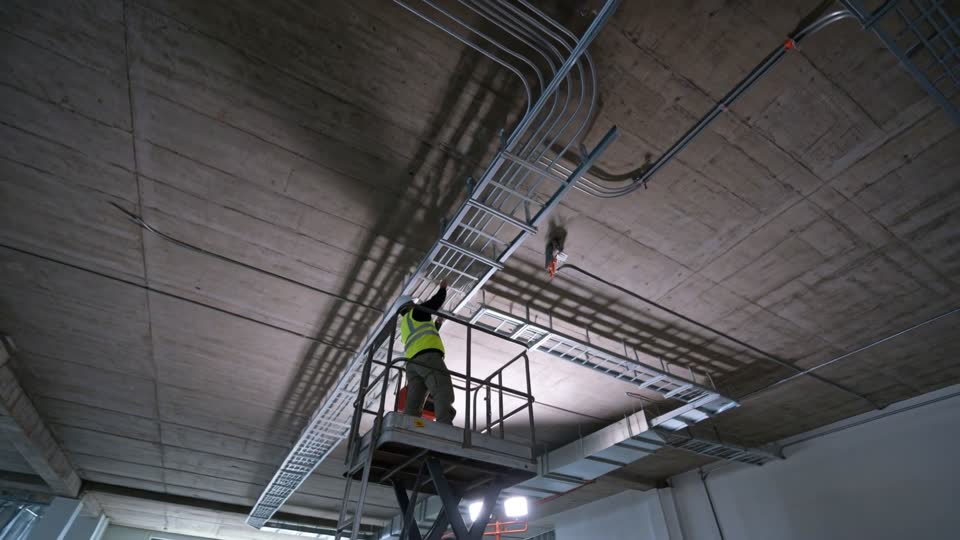
Service · E-111
Fire alarm installation and alterations in Calgary
A fire alarm alteration is finished when the changed system has been verified and the records match the building, not when the last device goes up.
CCT 01What counts as installing or altering a fire alarm
Three different kinds of work get called “fire alarm work”, and they follow different rules:
- Installation and alteration. A new system in a new building, a replacement control panel, a conversion from a conventional to an addressable system, or devices added, moved or removed because walls, uses or equipment changed. This page covers that work.
- Annual inspection and testing. The yearly test of an existing system to CAN/ULC-S536, covered on the fire alarm and emergency lighting inspections page.
- Like-for-like repair. Replacing a failed device with the same type in the same place, usually in response to an inspection deficiency.
Alterations are more common than owners expect. A tenant fit-out that moves partitions can leave a room without a detector or a signal. A new commercial kitchen brings a suppression system that must report to the panel. Electromagnetic locks, elevator recall, fan shutdown, sprinkler flow and supervisory switches all tie into the alarm, and changing any of them changes the fire alarm system.
The trigger for an upgrade is often the panel. When a manufacturer stops supporting a panel, parts and programming become harder to obtain, and a deficiency that should be a simple repair turns into a replacement project. Ask the service company whether your panel is still supported before an inspection forces the question.
CCT 02Who does what
| Party | Usual role | What they produce |
|---|---|---|
| Owner, landlord or tenant in care and control | Commissions the work, arranges access and occupant notice, keeps records | Brief, approvals, impairment arrangements |
| Professional engineer | Designs the system or alteration where professional involvement is required | Stamped drawings or letters, including a final letter after verification |
| Electrical contractor (master electrician) | Obtains the electrical permit; installs wiring, pathways, power supplies and devices | Permit, installed work, inspection sign-off |
| Fire alarm vendor or technician | Supplies the panel and devices, programs the system, often the landlord’s named vendor | Programming, device list, compatibility confirmation |
| Verifier | Verifies the installed or altered system to CAN/ULC-S537 | Verification report and certificate |
| Monitoring provider | Receives signals off site; must know when the system is in test | Signal confirmation |
| Other trades | Sprinkler, mechanical, elevator, kitchen suppression and door hardware interfaces | Working interfaces for the verifier to test |
| The City of Calgary | Issues building and electrical permits, reviews plans, inspects | Permits, inspection records |
The gaps sit between rows. If the contract does not say who programs the panel, who pays for the verifier and who closes deficiencies the verifier finds, those items land on the owner at the end.
CCT 03Permits, stamps and plans review
In Calgary, both an electrical permit and a building permit are required to alter or install a fire alarm.1 The City treats fire alarm work as one of the permits that can be needed beyond the electrical permit itself,1 and it publishes a separate building permit requirement list for commercial fire alarm repair and upgrading. Only a master electrician can obtain the electrical permit.2
Where the size or occupancy of the building requires professional involvement, the drawings or letters must be signed and stamped by a professional engineer registered in Alberta, including a final verification.3 The building code sets when that involvement applies.4 For example, business, mercantile and industrial buildings of three storeys or fewer are exempt up to set areas, such as 500 m² (about 5,380 ft²) for a one-storey building.5 Many multi-tenant commercial buildings exceed those areas, and that exemption covers only business, mercantile and industrial buildings, so assume a stamp is needed until the designer confirms otherwise.
The electrical permit fee is $112 plus $9.79 per $1,000 of construction value,6 and starting work before the permit is issued doubles it.6 Non-residential permits can also attract additional plans review at $119 per hour.6 A building permit expires 180 days after issue and a trade permit 330 days after,4 so time the applications to the work. The commercial electrical permits guide covers the process, and engineer vs contractor explains who designs what.
CCT 04Tenant work on a base-building system
Most commercial tenants do not have their own fire alarm. Their suite has devices on the landlord’s system, and every change to those devices is an alteration to the whole building’s system. That shapes the scope in four ways:
- Named vendor. Many landlords require their own fire alarm vendor for any device or programming change, because the panel is proprietary or because they want one company accountable for the system.
- Capacity. Loops, signal circuits and power supplies have limits. Adding strobes to an open-plan suite can overload an existing circuit and trigger new power supplies or wiring.
- Separate permits. Calgary requires separate electrical permits for base-building work and tenant spaces,1 so the work letter should say whose permit covers the fire alarm changes.
- Responsibility. Under the Safety Codes Act, “owner” includes a lessee and anyone in care and control,7 so a tenant can carry fire-safety duties in its own space whatever the lease says about cost.
Settle the fire alarm scope before the tender, as part of tenant improvement planning. If the fire alarm changes are part of a larger fit-out that adds equipment, the service capacity calculator is the place to start the capacity question.
CCT 05Verification to CAN/ULC-S537
The National Building Code, 2023 Alberta Edition, requires fire alarm systems to be verified in conformance with CAN/ULC-S537 to confirm they operate satisfactorily.8 Verification is done after installation or alteration: the verifier checks each device and function and issues a report. It is different from the annual inspection to CAN/ULC-S536:2019 that the fire code requires of existing systems.7 An annual inspection certificate does not stand in for the verification of altered work.
For an alteration, the question is how much of the system must be re-verified: the new devices only, or everything on the affected circuits and every function they interact with. The standard and the designer answer that for each project, so get the answer in writing before pricing. Smoke detectors kept in service need attention too: the Fire Marshal’s bulletin of March 5, 2025 says smoke detector sensitivity and battery testing are mandatory, because the STANDATA that allowed delayed sensitivity testing was not renewed.9
Impairment and energized equipment
During an alteration, part or all of the system may be out of service, and testing can sound alarms, release locks and shut down fans. The owner, the qualified team and the monitoring provider must plan any impairment, and the fire department’s requirements apply when a system is taken out of service. Panel and power-supply work is energized-equipment work for qualified trades only. This page is planning information, not an installation or test procedure.
CCT 06A sequence that avoids a failed verification
- Collect the existing drawings, the device list, the panel model and the last annual inspection report, with its open deficiencies.
- Have the designer define the alteration, the re-verification boundary and whether a stamp is needed.
- Confirm device compatibility and panel capacity with the fire alarm vendor.
- Apply for the building and electrical permits, and book plans review time into the schedule.
- Order the panel and devices; their lead times, not labour, often set the finish date.
- Install and program with an impairment plan, notifying occupants and the monitoring provider.
- Verify, correct deficiencies and re-verify what failed.
- Deliver updated drawings, the device list, the verification report and the engineer’s letter, and update the annual inspection contract to match.
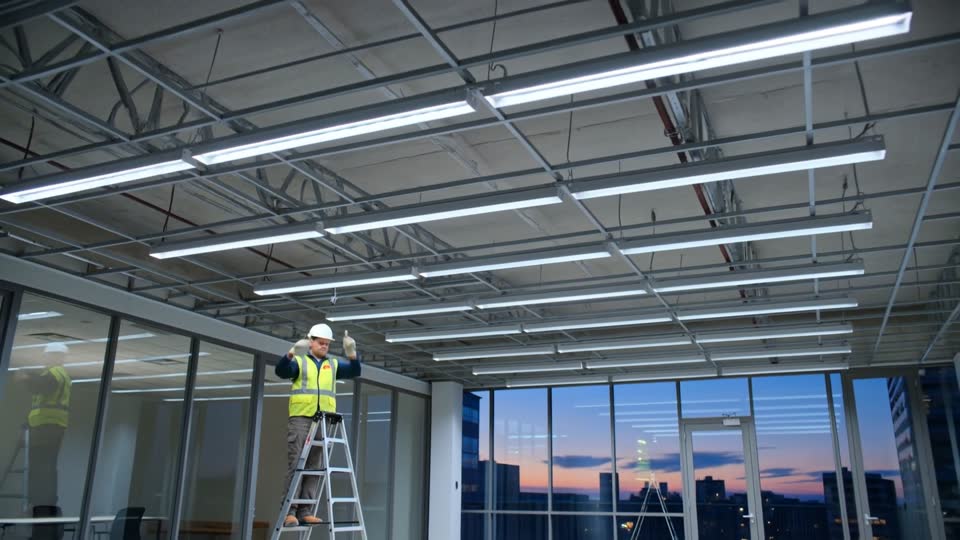
Separate the pre-existing deficiencies from the new work in both the price and the verification report. Otherwise the alteration contractor inherits problems it did not create, or the owner pays twice to find them.
CCT 07Fire alarm permits in Calgary’s data
Fire alarm electrical permits issued by the City of Calgary more than doubled, from 204 in 2019 to 446 in 2025.10 In 2025, 250 of those 446 permits were at properties the City assesses as non-residential and 70 at residential-class properties, a class that includes apartment buildings; 125 did not match the assessment roll, so these splits are floors.10 On the building permit side, 196 commercial and industrial building permits issued in 2025 carried the fire and security alarm work class.11
A permit is not a project: one permit can cover a single device relocation or a new system in a new building. The rise shows fire alarm alterations are routine commercial work in Calgary, not their size. Contains information licensed under the Open Government Licence – City of Calgary. More breakdowns are on the Calgary commercial electrical data page.
CCT 08What moves the price, and who buys it
No public schedule prices fire alarm installation. The drivers:
- device count and type, and whether new notification appliances need new circuits or power supplies;
- whether the existing panel is compatible, proprietary or at end of support;
- engineering, stamps, plans review and permit fees;
- interfaces with sprinklers, elevators, mechanical shutdown, kitchen suppression and door locks;
- work in occupied space, after-hours testing and suite access;
- the verification scope and the cost of re-verifying failed items.
The fire alarm and emergency lighting cost guide explains these in more detail. The demand is concentrated where systems are large and shared: condo and apartment buildings with suite access to arrange, retail centres where every tenant change touches the base system, and property managers running portfolios with ageing panels.
Questions people ask
Do I need a permit to install a fire alarm in Calgary?
Yes, two. Calgary requires both an electrical permit and a building permit to install or alter a fire alarm,1 and the electrical permit must be obtained by a master electrician.2 Where professional involvement is required, the submission needs drawings or letters stamped by an Alberta professional engineer.3
What is a CAN/ULC-S537 fire alarm verification?
It is the check, after installation or alteration, that every device and function of the fire alarm works as designed, documented in a verification report. The Alberta building code requires fire alarm systems to be verified to CAN/ULC-S537.8 In Calgary, where a stamp is required, the engineer’s submission includes a final verification.3
What is the difference between fire alarm verification and inspection?
Who can install a fire alarm system in Alberta?
The electrical permit can only be obtained by a master electrician,2 so the wiring is installed under an electrical contractor’s permit. Programming and panel work are usually done by the fire alarm vendor’s technicians, the design by a professional engineer where one is required, and verification by a qualified verifier. Alberta’s Tradesperson Lookup Tool lets anyone check an Alberta trade certificate.12
How much does fire alarm installation cost?
No public price schedule exists. The cost follows device count, panel compatibility, the engineering and verification scope, interfaces with other systems, and access in occupied buildings. Permit costs are formula-based: the electrical permit is $112 plus $9.79 per $1,000 of construction value.6 Compare bids on the same device list and verification boundary.
Sources
- Electrical permits for contractorsCity of Calgary · retrieved 2026-09-25
- About Master ElectriciansSafety Codes Council · retrieved 2026-09-25
- Complete Building Permit Application Requirement List - Commercial: Fire Alarm (repair/upgrading)City of Calgary · retrieved 2026-09-25
- Changes to existing buildingsThe City of Calgary · retrieved 2026-09-25
- STANDATA interpretation 23-BCI-012/20-PCB-014/20-GCB-018/24-ECB-009 (R1): Rowhousing buildings with five or more dwelling unitsGovernment of Alberta, Municipal Affairs · Issued April 2025 (PDF carries a marginal 'Superseded' watermark); retrieved 2026-09-25
- 2026 Building & Trade Permit Fee Schedule (R2026-02)The City of Calgary · 2026 fee schedule, revision R2026-02; retrieved 2026-09-25
- Fire Safety Maintenance Requirements (Calgary Fire Department Inspections)The City of Calgary (Calgary Fire Department) · Latest revision May 1, 2024 (NFC(AE) 2023); retrieved 2026-09-25
- STANDATA interpretation 23-BCI-011/24-ECI-009/23-FCI-006 Existing fire alarm systemsAlberta Municipal Affairs · March 2025
- Fire Marshal Bulletin March 5, 2025-001: Fire Alarm ReportingThe City of Calgary (Calgary Fire Department, Fire Marshal's Office) · Issued March 5, 2025; retrieved 2026-09-25
- Electrical Permits and Inspections (dataset vxgy-id5s)The City of Calgary, Open Government Licence – City of Calgary · queried 2026-09-25
- Building Permits (dataset c2es-76ed)The City of Calgary, Open Government Licence – City of Calgary · queried 2026-09-25
- Tradesperson Lookup ToolGovernment of Alberta (Tradesecrets) · retrieved 2026-09-25
Related
-
E-101
Tenant improvements
Office, retail and restaurant fit-outs: what the base building provides, what the tenant’s electrical scope covers, the drawings and the permits.
-
 E-102
Commercial service upgrades
Raising a building’s service: capacity checks, the ENMAX application and investment, CT metering, drawings and the shutdown.
-
 E-103
Three-phase power
New three-phase services and single-to-three-phase conversions for equipment, kitchens, shops and EV charging.