Service · E-107
Commercial lighting controls in Calgary
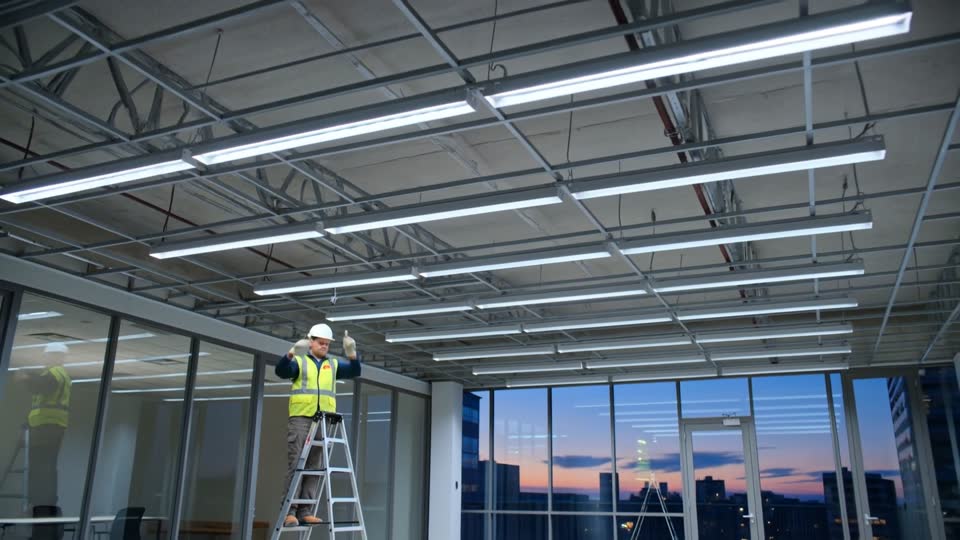
Controls save energy only when the sequence matches how people use the space. Write that sequence down before anyone chooses sensors, drivers or a network.
CCT 01What a lighting control system actually does
“Lighting controls” covers a handful of strategies that can be combined in one space. Each answers a different question about when light is needed:
- Occupancy sensing. Lights come on when someone enters and go off after the space has been empty for a set delay.
- Vacancy sensing. Occupants switch lights on by hand; the sensor only turns them off. It saves more in rooms with good daylight, because nobody is lit up automatically on a bright afternoon.
- Daylight harvesting. A photosensor dims or switches the fixtures nearest the windows or skylights as daylight rises, either continuously or in steps.
- Scheduling. A timeclock or building automation system sets lights off, or to a lower level, outside business hours, with an override for late work.
- Task tuning. The maximum output of a fixture is trimmed at commissioning when new LED fixtures over-light a space.
- Load shedding. On a signal, the system dims selected zones to cut demand at a peak.
The architecture is a separate choice. A standalone sensor and power pack controls one room. A room-based wired system ties sensors, switches and dimming drivers together within a space. A networked system, wired on a lighting bus such as DALI or on a wireless mesh, addresses fixtures individually, reports energy and faults, and can talk to the building automation system through a gateway. Networked systems give the most flexibility and the most things to maintain: software, gateways, licences and someone who knows the passwords.
CCT 02Write the sequence of operations first
A sequence of operations is a plain-language description, space by space, of what the lighting does. It is the document that decides whether a controls project saves energy or generates complaints. For each space type it should answer:
- What happens when the first person arrives, and when the last one leaves?
- Is the space auto-on or manual-on, and what is the time delay before lights go off?
- Which fixtures sit in the daylight zone, and do they dim or switch?
- What is the after-hours schedule, and how does a cleaner or a late worker override it?
- What must never go dark: stairs, exits, security camera views, hazardous machinery areas?
- What happens if a sensor, gateway or network connection fails?
The last question matters most in Calgary’s larger buildings, where lighting may be on the same network as mechanical and security systems. A good sequence fails safe: lights go to a defined level, not off, when a component loses communication.
Emergency lighting needs its own line in the sequence. Where normal fixtures double as emergency lighting, the designer must show how they come on when normal power fails, whatever state the control system is in. Self-contained battery units are simpler, but their feeds have code rules too: the electrical code wants the receptacle for unit equipment at least 2.5 m above the floor where practicable and within 1.5 m of the unit (Rule 46-304).1 Monthly and annual testing of that equipment is covered under fire alarm and emergency lighting inspections.
CCT 03The energy code and the permit question
Alberta brought the National Energy Code of Canada for Buildings 2020 into force on May 1, 2024,2 and adopted its Tier 1 as the minimum energy-efficiency level for buildings outside Part 9 of the building code.2 The energy code’s lighting provisions deal with both how much power lighting may use and how it is controlled. Which of those provisions apply to a given alteration is for the designer and the authority having jurisdiction to settle for that project. An installation that met the code in force when it was built generally does not have to be upgraded to a new edition, but modifying it can bring the new work under current requirements.3
Permits follow the wiring, not the product. Calgary does not require an electrical permit when fixtures are only replaced,4 but it does require one for new wiring and for extending or altering circuits.4 Adding line-voltage sensors, splitting a room into new switching zones, running a dimming bus or relay panel, or changing how emergency fixtures are fed all alter circuits. Budget for a permit on any controls project beyond a like-for-like device swap, and confirm with the City when in doubt.
A contractor electrical permit costs $112 plus $9.79 for every $1,000 of construction value,5 plus the Safety Codes Council fee of 4% of the permit fee, with a $4.50 minimum and $560 maximum.5 In a multi-tenant building, base-building and tenant work take separate electrical permits.6 The commercial electrical permits guide covers inspections and plans review.
CCT 04Who does what on a controls project
| Task | Owner or tenant | Designer | Electrical contractor | Controls vendor or integrator |
|---|---|---|---|---|
| Sequence of operations | Approves; supplies hours and uses | Writes it | Reviews for buildability | Confirms the product can do it |
| Energy-code compliance approach | Accepts | Sets and documents it | Builds to it | Supplies product data |
| Fixture and driver compatibility | Supplies existing fixture data | Specifies | Checks on site | Confirms compatibility |
| Sensors, relays, wiring and bus | Not involved | Lays out zones | Installs under permit | Supplies devices |
| Emergency lighting interface | Keeps test records | Designs it | Installs and tests | Supplies transfer devices if integrated |
| Network, IT security and BAS link | Owner’s IT decides | Defines the interface | Pathways and power | Configures gateways |
| Programming and commissioning | Witnesses | Reviews results | Supports | Programs and tests each zone |
| Post-occupancy tuning | Reports complaints | Approves changes | Adjusts hardware | Adjusts settings |
| Software, licences, support | Pays and holds admin access | Specifies terms | Not involved | Provides and renews |
The last row is where surprises live. Ask in the tender who holds administrator access at handover, what recurring software or cloud fees apply, and whether another integrator can take over programming if the original vendor leaves the market.
CCT 05What controls save on a Calgary bill
Controls mostly save energy, measured in kWh. Whether they also cut demand charges depends on your rate class and when your building peaks. On ENMAX Power’s small commercial rate, D200, which applies to sites using less than 5,000 kWh a month,7 the saving shows up in the energy-based charges.
Larger sites on D300 and D310 pay for demand, and demand is billed in kVA, not kW. Billing demand is the greatest of metered, ratchet or contract demand, and the ratchet is 90% of the highest kVA demand in the last 365 days.7 Demand charges are daily: the D300 transmission demand charge, for example, is $0.271085 per day per kVA of billing demand.7 A sensor that switches off an empty storeroom at night saves energy, but it does nothing for demand unless the lights it controls were on during the building’s peak interval. Daylight dimming in a south-facing office at midday, or load shedding during a known peak, is what moves demand.
Interval data is the evidence. ENMAX installs interval meters at sites planned at 150 kVA or more, and at existing sites once demand registers 150 kVA or more twice in twelve months.8 Ask the retailer or ENMAX for the interval history before claiming a demand saving. The LED retrofit payback calculator separates the energy and demand effects when controls and fixtures are replaced together.
Incentives change often; these statuses were read on 2026-09-25. ERA’s Energy Savings for Business program has allocated all its funding.9 ERA’s Strategic Energy Management for Industry, a $70 million program for industrial and manufacturing facilities only, has waitlists open for all activities.10 Calgary’s Commercial Clean Energy Improvement Program has its intake paused.11 Confirm status on the program page before a business case depends on it.
CCT 06Commissioning and the first year of tuning
Controls that are installed but not commissioned tend to be disabled within months, usually by someone taping over a sensor. Commissioning means testing every zone against the sequence, not a sample:
- Confirm each sensor controls the fixtures it should, and only those.
- Set time delays and sensitivity for the real use of each room, not the factory default.
- Calibrate daylight sensors with the blinds in their normal position and the space furnished.
- Test schedules, overrides and the after-hours sequence, including the cleaners’ route.
- Test the emergency lighting response to a loss of normal power.
- Record every setting, and give the owner the settings file and the administrator credentials.
Calgary’s light changes a great deal through the year, from low winter sun and snow glare to long summer evenings, so daylight settings made in one season may need adjusting in another. Write a post-occupancy tuning visit into the contract, and give occupants a named person to call instead of a roll of tape.
Life-safety lighting
Control changes can leave stairs, exits or emergency fixtures dark if the emergency interface is wrong. Wiring relays, power packs and transfer devices is electrical work on circuits that often serve occupied areas; it needs isolation by qualified workers and a permit where one is required. This page is planning information, not wiring or programming instructions.
CCT 07What moves the price
No official source publishes lighting controls prices, and a per-square-foot figure hides the decisions that set them. Price these drivers instead:
- Architecture. Standalone sensors, room-based systems and networked systems differ in devices, programming and ongoing support.
- Zone count. Every separately controlled zone adds devices, wiring and commissioning time.
- Existing fixtures. Drivers that cannot dim, or dim on a different protocol, turn a controls job into a fixture or driver replacement.
- Integration. A link to the building automation system, IT security review and gateway configuration.
- Occupied-building work. After-hours installation, ceiling access and protection of finished spaces.
- Software and support. Licences, cloud fees, spare sensors and a service agreement.
Statistics Canada’s price index for the electrical division of Calgary non-residential buildings stood at 111.3 in the second quarter of 2026 (2023 = 100).12 It tracks contractors’ input costs, not the price of any controls job. The electrical cost per square foot guide explains why area-based figures mislead, and comparing electrical bids shows how to line up a networked bid against a standalone one.
CCT 08How the approach changes by building
The strategies are the same everywhere; the mix is not.
- Offices. Open areas suit occupancy control by zone with daylight dimming along the perimeter; private offices and meeting rooms suit vacancy sensing. Controls are usually specified as part of tenant improvement work, within the landlord’s standards.
- Retail. Schedules tied to store hours do most of the work. Display lighting, signs and mall criteria limit what can dim, and stockrooms suit occupancy sensors.
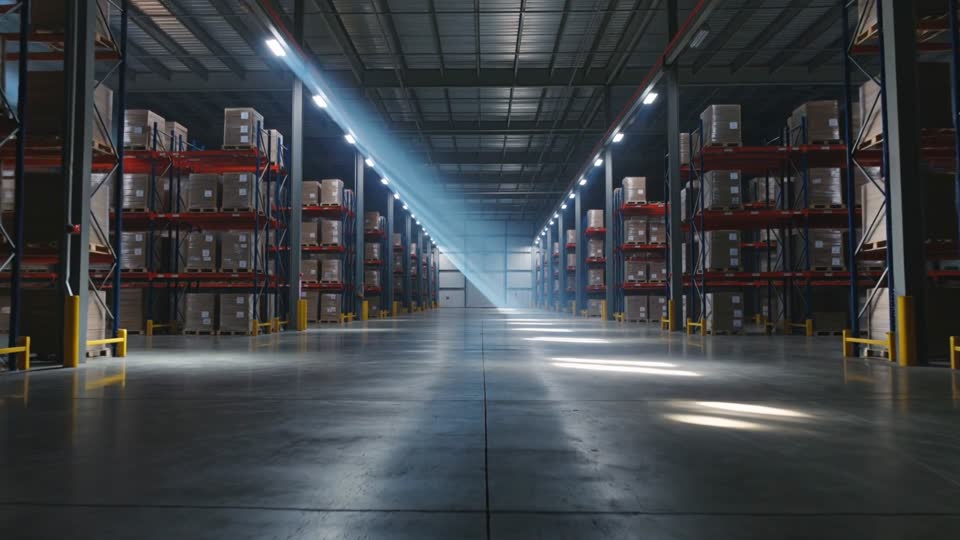
- Warehouses. High-bay fixtures with integrated sensors dim racking aisles until a forklift or picker enters. Sensor coverage at mounting height, and the pattern of traffic, set the saving.
- Parkades. Fixtures that drop to a lower level when no vehicle or person is detected, with security camera coverage taken into account.
Where fixtures are old, controls are usually easiest and least disruptive to add during an LED lighting retrofit, when new drivers can be chosen for the control system rather than adapted to it.
Questions people ask
What is daylight harvesting?
It is a control strategy that uses a photosensor to dim or switch the fixtures nearest windows or skylights when daylight is enough on its own. It works well only when the daylight zone is drawn correctly, the sensor is calibrated in the finished space, and the dimming drivers are compatible with the controls. The saving is in energy, and in demand only if it reduces load during the building’s peak.
Are lighting controls required in commercial buildings in Alberta?
The energy code includes lighting control provisions, and Alberta brought NECB 2020 into force on May 1, 2024.2 Whether those provisions apply to your project depends on whether it is new construction, an addition or an alteration, and on the scope of the lighting work. The designer establishes the compliance path and the authority having jurisdiction confirms it.
Do lighting controls need a permit in Calgary?
What is the difference between an occupancy sensor and a vacancy sensor?
An occupancy sensor turns lights on automatically when someone enters and off when the space is empty. A vacancy sensor only turns them off: occupants switch them on by hand. Vacancy sensing saves more in daylit rooms and small offices, while occupancy sensing suits washrooms, corridors and storerooms where hands are full or switches are hard to find.
What is a DALI lighting control system, and what does it cost?
DALI is a digital lighting bus that lets each driver be addressed individually, so fixtures can be grouped, dimmed and monitored in software rather than by rewiring. No official source publishes DALI prices. The cost follows the number of fixtures and zones, whether existing drivers must be replaced, the gateways and integration required, programming and commissioning time, and any ongoing software fees.
Sources
- STANDATA interpretation 24-ECI-046 Emergency power supply, unit equipment, exit signs, and life safety systemsAlberta Municipal Affairs · April 2025
- Notice: New Alberta codes editions (NBC(AE) 2023, NFC(AE) 2023, NECB 2020)Alberta Municipal Affairs · April 2024
- STANDATA bulletin 24-ECB-000 Object, scope, and definitionsAlberta Municipal Affairs · April 2025
- Homeowner electrical and plumbing permitsCity of Calgary · retrieved 2026-09-25
- 2026 Building & Trade Permit Fee Schedule (R2026-02)The City of Calgary · 2026 fee schedule, revision R2026-02; retrieved 2026-09-25
- Electrical permits for contractorsCity of Calgary · retrieved 2026-09-25
- ENMAX Power Corporation Distribution Tariff Rate Schedule - rates in effect as of July 1, 2026ENMAX Power Corporation · Rates in effect as of July 1, 2026 (DAS/SAS rates per AUC Decision 30299-D01-2025, effective January 1, 2026); retrieved 2026-09-25
- ENMAX Power Corporation Distribution Tariff - Customer Terms and ConditionsENMAX Power Corporation · Effective January 1, 2026; retrieved 2026-09-25
- Energy Savings for BusinessEmissions Reduction Alberta · retrieved 2026-09-25
- Strategic Energy Management for Industry (SEMI)Emissions Reduction Alberta · retrieved 2026-09-25
- Commercial Clean Energy Improvement ProgramCity of Calgary · Page read 2026-09-25
- Table 18-10-0289-01 Building construction price indexes, by type of building and divisionStatistics Canada · Q2 2026 (April-June 2026); released 2026-07-24
Related
-
E-101
Tenant improvements
Office, retail and restaurant fit-outs: what the base building provides, what the tenant’s electrical scope covers, the drawings and the permits.
-
 E-102
Commercial service upgrades
Raising a building’s service: capacity checks, the ENMAX application and investment, CT metering, drawings and the shutdown.
-
 E-103
Three-phase power
New three-phase services and single-to-three-phase conversions for equipment, kitchens, shops and EV charging.